
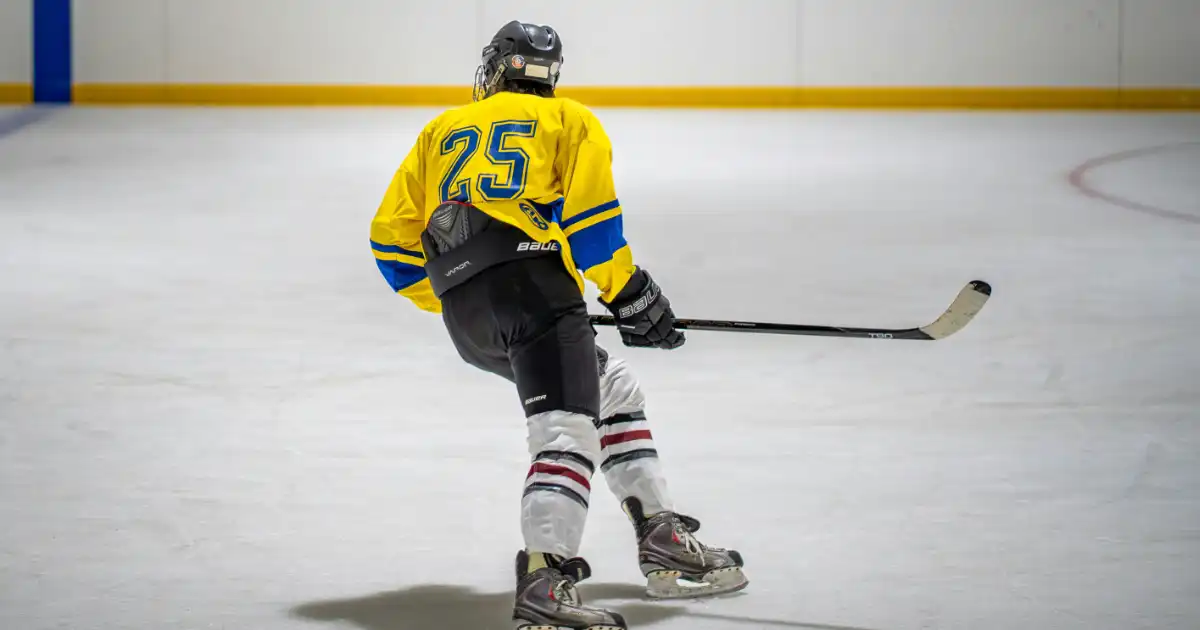
One of the biggest milestones in a hockey player’s development is learning to trust both edges of the skate blade. While inside edges often feel more natural, outside edges are what allow players to corner at speed, protect the puck, transition smoothly, and maintain balance in challenging situations. Learning how to improve your outside edge control takes time, but the payoff is noticeable every time you step onto the ice.
Many newer players avoid putting weight onto their outside edges because it feels unstable at first. That hesitation is completely normal. Like any skating skill, confidence comes from proper technique and consistent practice rather than trying to force deeper leans too soon.
Why Outside Edge Control Matters
Every skate blade has two working edges: an inside edge and an outside edge. Most beginners rely heavily on the inside edge because it naturally feels more secure. However, experienced players constantly use both edges without thinking about it.
Good outside edge control helps you:
- Turn more efficiently without losing speed.
- Maintain balance while changing direction.
- Improve crossovers in both directions.
- Protect the puck while skating.
- Recover more easily after contact.
- Create smoother transitions between forward and backward skating.
The better your outside edge control becomes, the less your skating feels mechanical and the more fluid your movements become.
Start With Proper Skating Position
Before working on edge drills, make sure your skating posture is solid.
Keep your knees bent, your chest up, and your weight centered over your skates. Your ankles should remain relaxed enough to allow the skates to tilt naturally onto the outside edge without forcing the movement.
Standing too upright makes outside edges much harder to control because your center of gravity stays too high.
Trust the Edge
One of the biggest mistakes players make is trying to stay perfectly upright.
Outside edges require you to gradually shift more of your weight onto that edge while keeping your body balanced over your skates. At first, this can feel uncomfortable because your body naturally wants to move back toward the inside edge.
Instead of leaning dramatically, think about gently rolling your skate onto the outside edge while keeping your hips centered over your feet. Small movements build confidence much faster than exaggerated ones.
Drills to Improve Outside Edge Control
Practice One Foot at a Time
Single-leg exercises help isolate the outside edge without adding unnecessary complexity.
Glide on one skate while allowing the blade to rest lightly on its outside edge. Keep the free leg slightly off the ice and focus on staying balanced rather than traveling a long distance.
Start with only a few feet of glide before switching legs.
As your confidence grows, gradually increase both the distance and the amount of edge angle.
Use Gentle Outside Edge Circles
Large circles are one of the simplest ways to improve outside edge control.
Choose one direction and skate around a wide faceoff circle or another large circular marking. Concentrate on allowing your outside skate to carry more of your weight while maintaining steady knee bend.
Avoid rushing through the drill. Smooth, controlled turns are more valuable than fast ones.
Repeat the exercise in both directions since most players naturally feel stronger turning one way than the other.
Practice Outside Edge Slaloms
Once basic glides become comfortable, practice gentle slalom movements using your outside edges. Shift your weight smoothly from one skate to the other while allowing each outside edge to guide shallow S-shaped turns.
This drill develops better edge awareness and teaches you how to maintain steady pressure on the outside edge while remaining balanced.
Try One-Foot Figure Eights
Set up two cones or use two faceoff dots as reference points and skate slow figure-eight patterns while spending as much time as possible gliding on one foot. This encourages better edge awareness, improves balance, and helps you become more comfortable trusting your outside edges through continuous turns.
Improve Crossovers
Crossovers naturally strengthen outside edge control because they require you to trust your edges throughout the movement.
During every crossover, your outside skate briefly supports most of your body weight on its outside edge before the crossing skate takes over. Learning to trust that outside edge is one of the keys to smooth, powerful crossovers.
Practice slow crossovers before increasing speed.
Focus on balance and clean technique instead of trying to complete as many crossovers as possible. Proper form develops stronger skating habits than simply moving faster.
Build Confidence Through Repetition
Outside edge development is largely about building trust.
The more quality repetitions you complete, the more comfortable those edges begin to feel. Progress often comes gradually. One practice may feel awkward, while the next suddenly feels much smoother.
Consistent practice two or three times each week usually produces better long-term improvement than one long skating session every few weeks.
Strength Off the Ice
Off-ice training can also support better edge control.
Exercises that improve balance, ankle stability, and lower-body strength make it easier to control your skates once you’re back on the ice. Single-leg balance drills, split squats, lateral lunges, and controlled bodyweight squats all help reinforce the stability needed for strong skating mechanics.
Even five to ten minutes of balance work a few days each week can complement your on-ice training.
Common Mistakes to Avoid
When working to improve outside edge control, watch for these common errors:
- Standing too upright.
- Looking down at your skates instead of ahead.
- Trying to lean too aggressively before developing balance.
- Rushing drills instead of focusing on smooth movement.
- Practicing only your stronger turning direction.
Correcting these habits early makes learning much easier over time.
Final Buzzer
Learning how to improve your outside edge control is one of the most valuable skating investments you can make. Better edge work improves balance, turning, puck protection, transitions, and overall confidence on the ice.
The process takes patience, but every practice session builds a stronger skating foundation. Focus on proper posture, commit to controlled movements, and gradually increase the difficulty as your confidence grows. Over time, those once-uncomfortable outside edges will become one of the strongest parts of your skating game.