
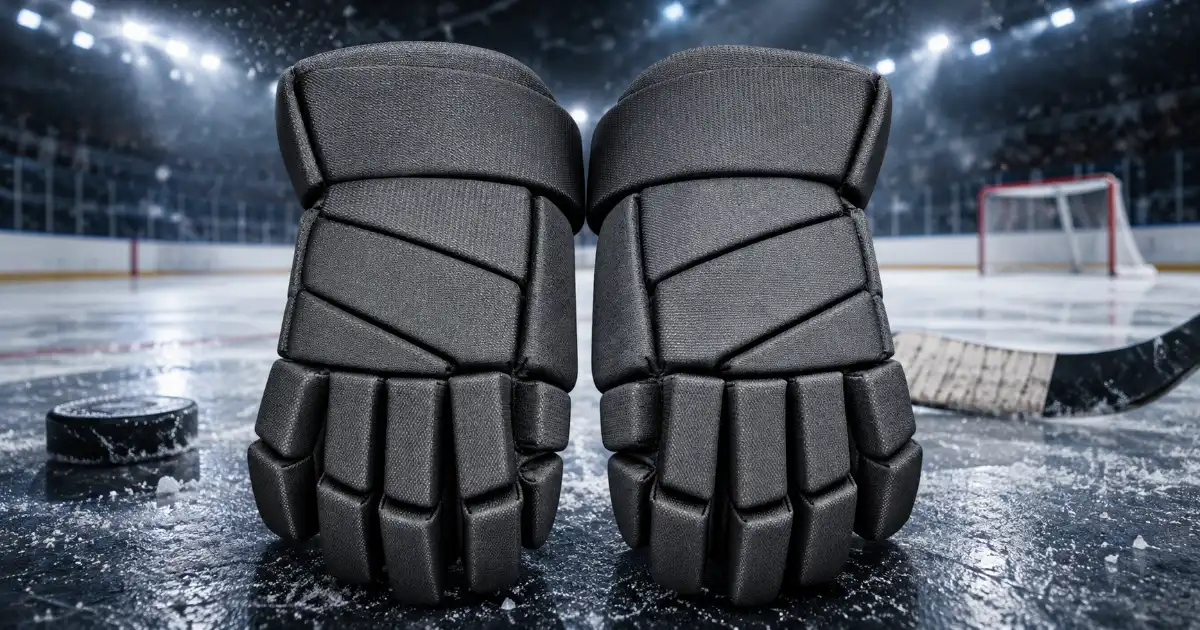
Hockey gloves take a beating. Every practice and game puts more wear on the palms, seams, padding, and interior of the glove. Add sweat, repeated gripping of the stick, contact with the boards, and the occasional slash, and even a good pair of gloves will eventually start showing its age.
The tricky part is knowing when that wear actually matters. A pair of hockey gloves can look pretty rough and still have plenty of life left. Scuffs, faded colors, and worn graphics don’t necessarily affect how well the gloves perform. On the other hand, some types of wear can affect comfort, stick control, or the protection the gloves are supposed to provide.
So how do you know when it’s actually time for a new pair? Here are five signs worth checking.
1. The Palms Are Wearing Thin or Developing Holes
The palm is often one of the first areas of a hockey glove to wear out because it’s constantly rubbing against the stick. A little discoloration or surface wear isn’t necessarily a problem. What matters more is whether the material is becoming noticeably thin, developing holes, or beginning to tear around high-contact areas.
You may also notice a difference in how the stick feels in your hands. A badly worn palm can change the feel of the grip, while a hole can allow part of your hand or fingers to contact the stick directly.
A hole in the palm doesn’t automatically mean the entire glove needs to be replaced. Small areas of damage can sometimes be patched, and a good pair of gloves may be worth professionally repalming. If the rest of the glove is still in good condition, a repair can extend its useful life. Once several areas are wearing through or the rest of the glove is showing significant wear as well, replacement may make more sense.
2. The Padding Is Damaged, Flattened, or Out of Position
Hockey gloves are designed to help protect the hands and wrists from impacts, sticks, pucks, and other contact that comes with the game. That protection depends on the different protective components of the glove staying intact and where they’re supposed to be.
Over time, those components can become damaged, compressed, or displaced. Look for areas where padding has noticeably flattened, shifted out of position, become exposed, or no longer provides the same coverage as the surrounding sections of the glove. Cracked or displaced inserts, exposed padding, and sections that no longer properly cover the hand are good reasons to consider retiring a pair of gloves.
You can’t determine exactly how protective a glove is simply by squeezing the padding with your fingers, but obvious deterioration, missing coverage, or damaged protective components shouldn’t be ignored. A glove doesn’t have to look destroyed before its condition becomes a concern.
3. The Gloves No Longer Fit Correctly
Sometimes the gloves haven’t worn out. The player has simply outgrown them. This is particularly important with youth hockey players, who can seemingly grow out of equipment between breakfast and practice.
A properly fitting hockey glove should provide coverage without significantly restricting movement. If a player’s fingers are pressing tightly against the ends, the cuff no longer provides appropriate coverage around the wrist, or the glove feels noticeably too small, it may be time to move up a size.
The opposite problem can happen with older gloves. Years of use can stretch materials and loosen the interior fit. A glove that once felt secure may begin moving around excessively on the hand. Players may find themselves constantly adjusting it or gripping harder simply to make the glove feel secure.
Fit isn’t just about comfort. A glove that doesn’t stay where it belongs may not provide the coverage it was designed to provide.
4. Structural Damage Is Affecting the Glove
Hockey gloves accumulate little battle scars over time. A loose thread or cosmetic scuff isn’t usually a reason to immediately replace them, but structural damage is different.
Check the seams around the fingers and backhand, the thumb, the cuff, and the areas where protective pieces are attached. Look for large seam separations, damaged finger or thumb sections, loose components, or areas where the glove is beginning to come apart.
Movement matters too. Players should be able to comfortably open and close their hands and move their fingers without fighting the glove. If damaged material is bunching up, a finger section has become unusually stiff, or part of the glove is interfering with normal movement, the problem has moved beyond appearance.
Minor repairs can extend the life of otherwise good gloves. Once multiple parts of the glove are failing, however, continuing to patch them may stop making sense.
5. Repairs Are No Longer Worth It
Not every damaged hockey glove belongs in the trash. A loose seam may be repairable, a small palm hole may be patched, and some gloves can even be professionally repalmed, giving a favorite pair considerably more life.
The question is what condition the rest of the glove is in. Repairing the palm makes sense when the padding, shell, fingers, cuff, and other components are still in good condition. It becomes harder to justify when the palm is torn, several seams are opening, the interior is deteriorating, and other parts of the glove have seen better days.
At some point, you’re no longer repairing one problem. You’re trying to keep an entire worn-out glove alive. That’s usually the point when replacement becomes the better option.
Don’t Replace Hockey Gloves Just Because They Look Worn
Hockey equipment isn’t supposed to remain showroom-perfect. Gloves get scuffed. Colors fade. Graphics wear away. Palms become discolored. The inside may develop the unmistakable aroma of a hockey bag that probably shouldn’t be opened in a confined space.
None of those things automatically means the gloves need to be replaced. The more useful question is whether the wear is affecting fit, movement, grip, or protection. If the gloves still fit correctly, move naturally, have intact protective components, and aren’t developing serious holes or structural damage, they may still have plenty of hockey left in them.
Regularly airing gloves out and allowing them to dry between uses can also help control moisture and odor, making them considerably more pleasant to put on.
Check Your Gloves Before the Damage Becomes Obvious
You don’t need to inspect hockey gloves after every shift, but giving them a quick look every so often is worthwhile, particularly for players who are on the ice several times each week. Turn them over and look at the palms, check the seams around the fingers, look over the padding and protective components, and make sure the cuff and thumb are intact.
For parents, it’s also worth asking younger players how their gloves actually feel. Kids don’t always announce that a piece of equipment has become too small or uncomfortable. Sometimes they simply adjust how they play with it.
Catching a worn palm or failing seam early may also give you the option of repairing the glove before the damage becomes much larger.
When It Is Time for a New Pair
If your current gloves are reaching the end of their useful life, replacement is also an opportunity to reconsider what you like about them. Pay attention to fit, finger movement, cuff mobility, palm feel, and how naturally the glove closes around the stick. Two gloves labeled with the same size can feel surprisingly different once they’re on your hands.
We recently updated our ABHS hockey gloves with refreshed materials and a new visual design, giving players another option when their current pair finally reaches retirement age.
If you’d like to understand more about what the different parts of a glove actually do, take a look at our guide, How Hockey Gloves Protect Your Hands, where we break down the role of the padding, fingers, thumb, palm, and cuff.
The best time to replace hockey gloves isn’t when they stop looking new. It’s when wear starts getting in the way of the things the gloves are there to do: fit properly, move with your hands, help you control your stick, and provide protection while you play.