
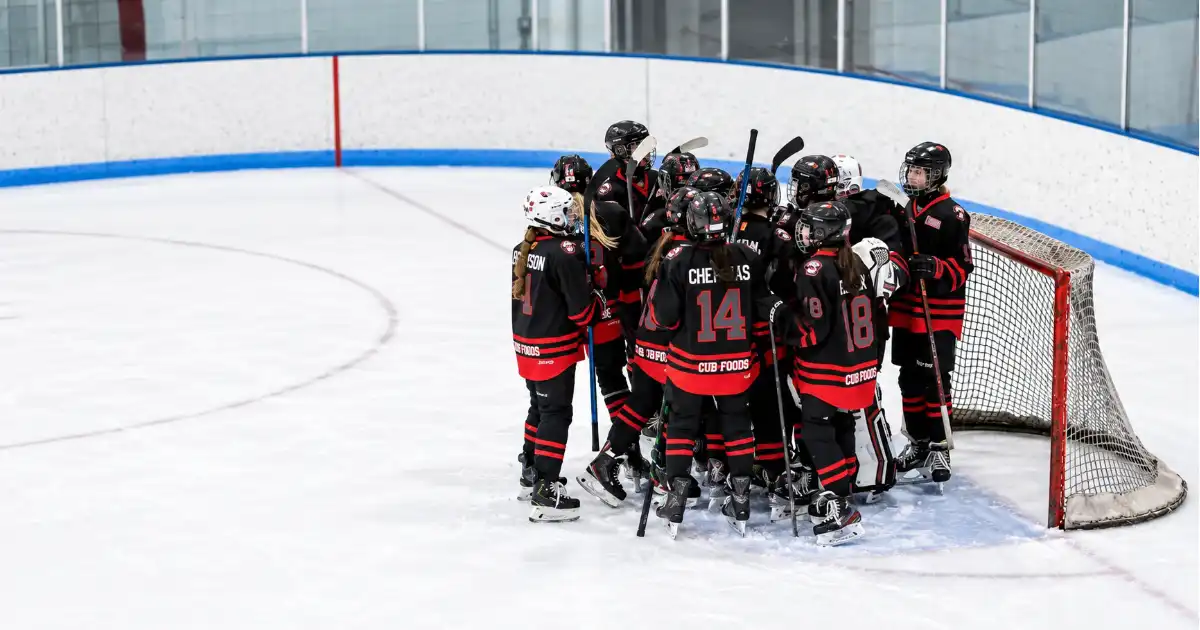
Every hockey team starts with a roster.
There are forwards, defensemen and goalies. Everyone gets a jersey, practices are scheduled, lines begin to take shape and eventually the team plays its first game. On paper, that’s enough to call it a team.
But anyone who has spent much time around hockey knows there is a difference between a group of players wearing the same jersey and a team that actually feels like a team.
That part takes longer.
It develops through practices, games, locker-room conversations, tournament weekends and hundreds of little moments that rarely show up on a scoresheet. Eventually, players stop simply playing alongside one another and start knowing what their teammates are going to do before they do it.
That’s when a hockey team begins to become something more than a roster.
Team Chemistry Starts With Time Together
Hockey players spend a lot of time together.
There are practices during the week, games on weekends, early mornings at the rink and tournaments that can consume an entire weekend. Youth hockey families sometimes joke that they spend more time with their hockey team than they do with anyone else during the season.
All of that time matters.
Players learn who likes to joke around before games and who gets quiet. They learn who is always early, who somehow forgets something every week and who can be counted on when a teammate needs help.
None of that necessarily makes anyone better at shooting or skating, but it creates familiarity. And familiarity makes it easier for players to communicate, trust one another and feel comfortable being themselves around the team.
The Locker Room Develops Its Own Personality
Every hockey locker room seems to develop its own culture.
There are nicknames that make no sense to anyone outside the team. There is usually a playlist everyone hears far too many times. Certain players sit in the same places. Pregame routines develop. Someone becomes responsible for the music. Someone else becomes the player who can make everyone laugh after a difficult loss.
Most of these traditions aren’t planned.
They simply appear over the course of a season.
Those little rituals can become surprisingly important because they give players a sense that this is their team. The locker room becomes more than a place to put on equipment. It becomes the place where much of the team’s identity is created.
Sometimes Looking Like a Team Helps It Feel Like One
There is also something different about the first time everyone puts on the same jersey.
Before that, a new team can still feel like a collection of individual players. Then the jerseys arrive, everyone has their name and number, and suddenly the group has a visual identity of its own.
A jersey doesn’t create team chemistry, of course. But it can help reinforce the feeling that everyone belongs to the same group.
That’s one reason hockey jerseys can become so meaningful to players. A jersey can eventually represent an entire season: the teammates who wore it, the tournaments played in it and the memories attached to that particular team.
For teams looking to create that shared identity, Just Hockey Jerseys offers custom hockey jerseys that can give players something that’s unmistakably theirs from the moment they step onto the ice.
The jersey may make a group look like a team. Everything that happens while wearing it is what gives it meaning.
Trust Eventually Shows Up on the Ice
Team chemistry isn’t limited to friendships and locker-room jokes. Eventually, players begin showing it during games.
A winger starts knowing when a center is going to drive toward the net instead of looking for a pass. A defenseman recognizes when their partner is about to pinch and automatically slides over to cover. A player under pressure knows roughly where a teammate should be without having to look around first.
Teammates aren’t reading each other’s minds, even when it occasionally looks that way.
They’ve simply played together enough to recognize patterns.
That familiarity can make the game faster because players spend less time figuring out what everyone else is doing. They begin trusting teammates to be where they’re supposed to be and to help when something goes wrong.
That trust can also affect confidence. A player who knows teammates will support them after a mistake may be more willing to make a play instead of constantly worrying about making the wrong one. It’s one reason confidence can change a hockey game even when nothing about a player’s physical ability has changed.
Everyone Has to Feel Like They Have a Role
Goals and assists are easy to notice. Many of the things that help a hockey team succeed aren’t.
One player might be excellent at killing penalties. Another might consistently win battles along the boards. A defenseman may rarely score but make the simple breakout pass that starts the offense. Another player might be the one who reliably gets the puck out of the defensive zone during the final seconds of a penalty kill. A backup goalie might spend most of a game on the bench but still be one of the loudest teammates supporting everyone else.
Teams tend to feel more connected when players recognize those contributions.
Not everyone is going to lead the team in scoring. Not everyone is going to play on the power play. But players can still understand how their role contributes to what the team is trying to accomplish.
When that happens, success becomes less about who scored and more about what the group accomplished together.
Small Moments Can Matter More Than Big Speeches
Team culture isn’t usually created by one dramatic locker-room speech.
It’s built through much smaller moments.
It’s a defenseman tapping the goalie on the pads after a difficult goal. It’s teammates celebrating just a little harder when someone scores their first goal of the season. It’s a player getting encouragement after making a mistake instead of hearing complaints from the bench.
It’s someone blocking a shot late in a game and getting a chorus of stick taps when they return to the bench.
Those moments may last only a few seconds, but they send a message: we noticed, and we’re with you.
Over the course of a season, those moments add up.
Winning Helps, but Losing Can Reveal a Team
It’s easy for a team to feel connected when everything is going well.
Everyone enjoys winning.
The more revealing moments often come when things aren’t going well. A team loses several games in a row. A tournament ends earlier than expected. Someone makes a mistake that leads to a goal. A key player gets injured.
Those situations test the culture that has developed.
Some groups begin pointing fingers. Others become closer.
A strong team doesn’t have to pretend losing is fun. Players can be disappointed and frustrated. The difference is whether that frustration gets directed at teammates or becomes something the group works through together.
Sometimes the games a team would rather forget end up producing the experiences players remember most.
Why Youth Hockey Teams Can Become So Memorable
Ask former youth hockey players about a season from years ago and the first thing they remember probably won’t be their team’s exact record.
They may remember winning a championship or scoring an important goal. But many of the stories that stick with them have nothing to do with the scoreboard.
They remember the teammate who could make everyone laugh. The early morning drives to the rink. The restaurant the whole team invaded after a game. The running joke that lasted all season. The music playing in the locker room.
Even difficult moments can become good stories with enough distance.
Hockey gives young players plenty of opportunities to learn how to be part of a group filled with different personalities, abilities and roles. They’re learning how to skate, pass and shoot, but they’re also learning when to lead, when to listen, how to support a teammate and how to respond when things don’t go their way.
So What Makes a Hockey Team Feel Like a Team?
It isn’t matching jerseys alone.
It isn’t having the best record in the league, either.
A hockey team begins to feel like a team when players know one another well enough to trust each other, understand their roles and care about what happens to the people sitting beside them in the locker room.
The wins are better because they’re shared. The losses are shared, too. Eventually, the season develops its own collection of stories, jokes and moments that belong only to that particular group of players.
The roster tells you who’s on the team.
Everything that happens after that is what makes it one.