
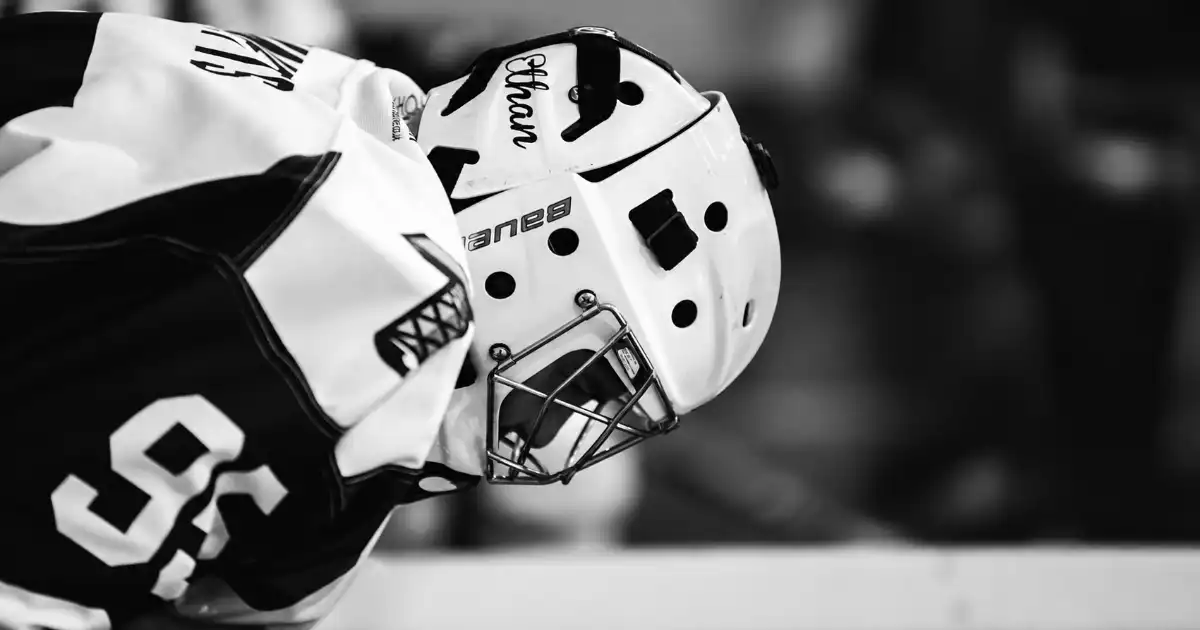
Confidence can be difficult to measure in hockey, but it is surprisingly easy to see. A player who hesitated with the puck in the first period may suddenly start carrying it through the neutral zone. A defenseman who was immediately throwing the puck off the glass begins waiting an extra second and finding an open teammate. A goalie makes a difficult save and seems noticeably calmer on the next several shots.
Their skills did not suddenly improve in the middle of the game. What changed was their confidence in using them.
Confidence cannot replace skating ability, puck skills, positioning or preparation. A confident player can still make a bad read, and a player struggling with confidence can still make a great play. The difference is that confidence can affect how willing a player is to trust and use the skills they already have.
Hockey moves too quickly for players to carefully think through every decision. When a player trusts what they see and trusts what they can do, the game can look very different.
What Confidence Looks Like on the Ice
Confidence does not necessarily mean being the loudest player on the bench or attempting highlight-reel plays every shift. Often, it appears in much smaller ways. A confident player asks for the puck. They make a pass instead of immediately getting rid of it under pressure. They attack an open lane when it appears. They take a shot when the opportunity is there instead of waiting for the perfect one.
Even simple plays can reveal a player’s mindset. Consider a defenseman retrieving the puck with a forechecker approaching. When confidence is low, the instinct may be to move the puck as quickly as possible simply to avoid making a mistake. When confidence is high, that same player may look over a shoulder, recognize the available options and make a controlled play.
The physical ability was probably there in both situations. Confidence affected whether the player trusted it.
Hockey Rewards Decisive Players
Many hockey decisions happen in fractions of a second. A player has to decide whether to shoot or pass, carry the puck or dump it, challenge the puck carrier or hold position. Hesitation can make a good option disappear.
Confidence can make it easier for players to commit to decisions instead of second-guessing them. That does not mean every decision will be correct. Confident players make mistakes too. But committing to a reasonable decision is often better than waiting until none of the available options remain.
This is one reason confidence and hockey performance can appear so closely connected. A player who trusts their instincts can even appear faster, not necessarily because their skating has changed, but because they are reacting and committing to plays without as much visible hesitation.
One Good Shift Can Change a Night
Almost every hockey player has experienced a game that suddenly felt different after one successful play. Maybe it is a clean zone entry. Maybe a player wins a difficult puck battle, creates a scoring chance or finally connects on a pass that had been missing earlier in the game. For a goalie, it might be making a tough save during an early scramble.
That moment can become evidence: I can do this tonight.
The next play may come a little more naturally, and then another. This is why a player struggling through the first period should not necessarily be written off for the rest of the game. Hockey creates constant opportunities to reset. Sometimes one productive shift is enough to interrupt a bad stretch and change how a player approaches the next one.
Confidence Can Work in the Other Direction
Unfortunately, the same process can happen in reverse. A player turns over the puck and starts worrying about another turnover. On the next possession, they make an overly safe play. Then they begin avoiding situations where they might make another mistake.
Before long, the player is no longer reacting entirely to the game. They are reacting to the possibility of getting something wrong. This can create a difficult cycle. Playing cautiously can reduce the very actions that normally make the player successful, which can make confidence fall even further.
The challenge is not pretending the original mistake never happened. It is preventing one mistake from becoming the lens through which every following play is viewed.
Confidence Can Spread Across the Bench
Confidence is not always individual. A strong penalty kill can energize an entire team. A goalie making several difficult saves can give skaters more belief that they can survive a rough stretch. A line creating sustained offensive-zone pressure can change the feeling on the bench even if it does not score.
You can sometimes watch the personality of a game change in a matter of minutes. Players start winning races. Defensemen become more comfortable holding the offensive blue line. Forwards attack loose pucks instead of waiting for them. The bench gets louder.
The opposite can happen as well. Several bad shifts, penalties or goals against can make a team increasingly tentative.
This is part of what hockey players and fans often describe as momentum. Momentum involves more than confidence, and the feeling of momentum does not guarantee what happens next. But belief can influence how aggressively and decisively players respond to what is happening.
Confidence Is Not the Same as Overconfidence
There is an important difference between trusting your ability and assuming nothing can go wrong. Confidence helps a player make the available play. Overconfidence can convince a player to force one that is not there.
A confident defenseman might carry the puck when open ice appears. An overconfident defenseman might try to beat three forecheckers because the previous rush worked. A confident forward takes a good shooting opportunity. An overconfident forward may ignore an open teammate while attempting a lower-percentage play.
Good confidence still respects the game. The goal is not to eliminate caution. It is to prevent fear of mistakes from becoming the primary reason behind every decision.
Where Real Confidence Comes From
Telling a player to “be confident” rarely creates confidence by itself. More durable confidence usually comes from preparation and experience. Players gain it by practicing skills until they become familiar, succeeding in situations they have encountered before and learning that mistakes do not automatically lead to disaster.
That is one reason practice matters beyond physical development. Repetition gives players something to trust when the game speeds up. But being able to perform a skill in practice does not always mean it will immediately appear during competition. As we discussed in Why Skills That Work in Practice Sometimes Disappear in Games, pressure, decision-making and the speed of a real game can change how easily a player accesses those skills. A player who has practiced receiving passes under pressure, shooting quickly or making decisions in small spaces has already experienced versions of those situations before. The game may be faster and the pressure greater, but the player is not starting from zero.
Confidence rooted in preparation gives players something more concrete to rely on than encouragement alone.
Coaches and Teammates Can Help
Confidence is personal, but the environment around a player matters. A coach does not need to ignore mistakes to protect a player’s confidence. Clear feedback can actually help because it gives the player something specific to correct. There is a major difference between hearing what went wrong on a play and feeling as though one mistake has erased every good thing a player can do.
Teammates can have a similar effect. A tap on the pads after a goal against, encouragement after a missed chance or a teammate continuing to pass the puck to someone who made an earlier mistake can send a simple message: the game is still going.
Sometimes that is exactly what a player needs.
The Next Shift Still Matters
Confidence will rise and fall throughout a hockey season, and sometimes throughout a single game. No player feels completely comfortable every night. Even experienced players have games where the puck seems difficult to control, decisions feel a little slower or mistakes begin piling up.
The important part is what happens next. Hockey provides another shift, another puck battle and another opportunity to make a good play. A difficult first period does not guarantee a difficult third. One turnover does not have to determine the next possession.
And sometimes the difference between a player who disappears from a game and one who changes it is surprisingly small.
They make one good play. Then they start believing the next one is there too.