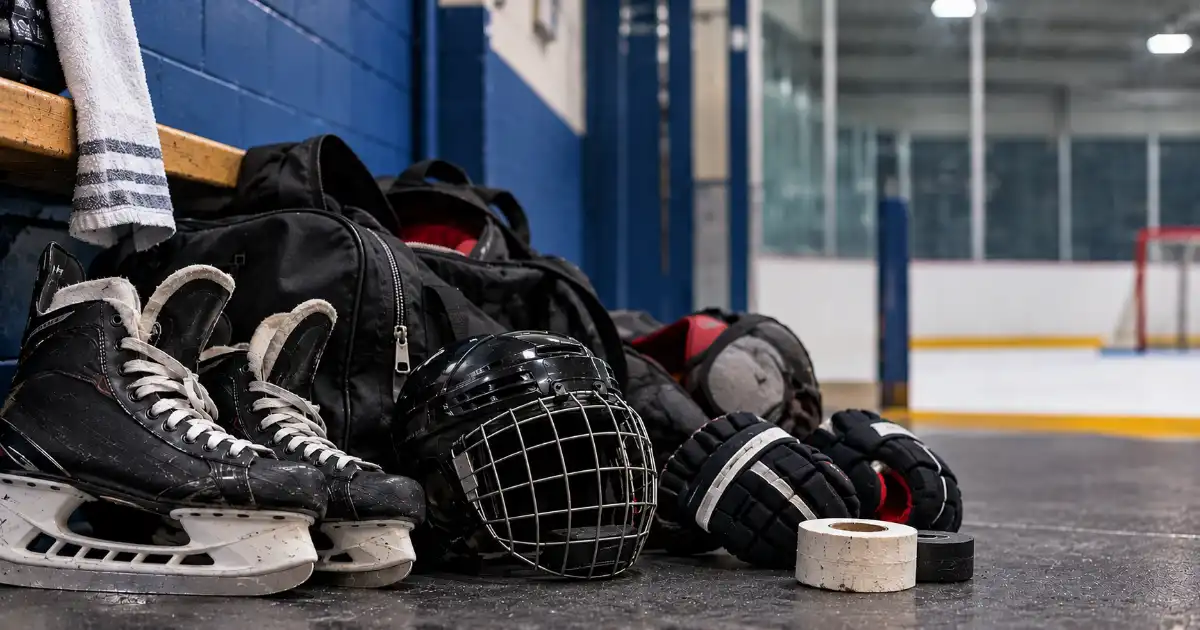
Hockey has never been an inexpensive sport. Between skates, protective equipment, sticks, helmets and all the smaller pieces that fill a hockey bag, gearing up for a new season can turn into a significant expense.
This season, families may be paying even closer attention to those costs. Equipment prices have already climbed considerably over the years, and new tariffs on some Canadian hockey equipment have added another source of uncertainty for U.S. players and families already dealing with higher prices.
The good news is that to save money on hockey gear, one doesn’t have to settle for untrustworthy equipment. In many cases, the best way to spend less is simply knowing where quality matters most, which equipment is worth buying used and when you’re paying for features you probably don’t need.
Start With What You Already Have
A new hockey season doesn’t automatically require a new set of equipment. Before shopping, empty the hockey bag and inspect everything. Check protective equipment for cracks, torn straps, compressed padding and other damage. Try everything on again, particularly for growing players, and make sure each piece still fits correctly.
Some equipment may need to be replaced because it is worn out or no longer fits. Other pieces might have several seasons left in them. That distinction can save a lot of money before you even start shopping.
For youth players, it can also help to check with your local hockey association. Equipment swaps and hand-me-down networks are common in hockey communities, and another family’s outgrown gear may have plenty of useful life remaining.
Know Which Hockey Gear Makes Sense to Buy Used
Used equipment can dramatically reduce the cost of playing hockey, but not every piece of gear should be treated the same way. Shoulder pads, elbow pads, hockey pants and bags can be good candidates for buying used when they’re still in good condition and fit properly. Gloves can also be worth considering if the palms, padding and stitching remain intact.
Skates are a little more complicated. A good used pair can be an excellent value, but fit is extremely important. Heavily used skates may also have worn liners, damaged holders or boots that have already conformed significantly to another player’s feet.
Used helmets deserve extra caution. If you’re considering one, verify that the helmet is undamaged, fits correctly and still carries a valid HECC certification label when HECC certification is required for your level of play. Because a used helmet’s history may be difficult to verify, this is one piece of equipment where buying new can provide additional peace of mind.
Buying used is about finding equipment with useful life remaining, not simply finding the lowest possible price.
Look for Last Year’s Hockey Equipment
One of the easiest ways to save money is to stop worrying about having the newest model. Hockey manufacturers regularly update their equipment lines, and when a new generation reaches stores, the previous version may be discounted even though it was considered premium equipment only months earlier.
This can be particularly useful when shopping for skates, gloves and protective equipment. A new graphic, revised product name or incremental design change doesn’t suddenly make last year’s equipment ineffective. If an older model fits properly and provides what you need, the clearance rack can sometimes be one of the best places in the store.
There is one important exception to the “older model” strategy: check certification dates when shopping for clearance helmets. A helmet sitting unused on a retailer’s shelf can still be older inventory, so make sure its certification will remain valid for the period you expect to use it. A deep discount isn’t much of a bargain if a growing player can only use the helmet for a short time before its certification expires.
And no matter what you’re shopping for, pay attention to the final price rather than the size of the discount.
A $350 stick marked down by $100 is still a $250 stick.
Don’t Pay for Performance Features You Don’t Need
Hockey equipment now covers an enormous range of prices. At the top end, manufacturers compete over weight, materials, construction techniques and performance features. Some of those improvements can absolutely matter to competitive players, but that doesn’t mean every player needs them.
A recreational adult playing once a week may have very different equipment needs from a veteran player practicing and playing several times a week. The same is true for a young player who may outgrow expensive equipment before wearing it out.
When comparing equipment, ask what you’re actually getting for the additional money. If the more expensive option fits noticeably better, offers better protection or provides a feature you’ll genuinely use, paying more may make sense. If the biggest differences are features that won’t matter to the player, the less expensive model may be the smarter purchase.
Decide Where Your Hockey Budget Matters Most
Saving money doesn’t mean choosing the least expensive version of everything. Instead, decide which pieces have the biggest effect on your comfort and your game.
A player who struggles with skate fit may decide that properly fitted skates are worth a larger portion of the equipment budget. Another player may care more about gloves or stick feel. Spend where you notice the difference and look for savings elsewhere.
That approach usually makes more sense than automatically buying every piece of equipment from the same price tier.
Be Smart About Hockey Sticks and Backups
Hockey sticks create a particular budgeting problem because they are both performance equipment and something that can break. If your primary stick costs several hundred dollars, carrying an identical backup becomes a major investment. Going without a backup isn’t a great solution either, especially when a broken stick can leave you scrambling during a game.
This is one area where shopping based on value rather than the logo on the shaft can make a substantial difference.
At All Black Hockey Sticks, we’ve followed that philosophy since introducing our sticks in 2011. Our senior hockey sticks remain $89, the same price they were when they were introduced. That also means players don’t have to wait for a clearance sale or promotional weekend to get that price.
ABHS also offers intermediate, junior and youth sticks, giving players and parents options for different ages and sizes without automatically moving into premium-stick pricing.
With tariffs creating new questions about the cost of hockey equipment, we’ve also explained why ABHS stick prices haven’t increased because of the new tariffs.
Whether you choose an ABHS stick or another brand, the same rule applies: compare what you’re actually getting for your money rather than assuming a higher price automatically means a better stick for you.
Watch for Deals Before You Need the Equipment
The worst time to shop for hockey equipment is often when something broke yesterday and you need a replacement before tomorrow’s game. If you know your gloves are nearing the end of their life or your child is close to outgrowing a pair of skates, start watching prices early.
End-of-season clearance sales, previous-generation equipment and retailer promotions can all provide opportunities to buy before you’re forced into whatever happens to be available. The same strategy works for backups. Buying a spare stick, skate laces or other commonly needed items ahead of time can prevent an emergency purchase later.
For growing players, shopping ahead requires a little more caution. Buying equipment too far in advance can erase the savings if the player outgrows it before getting much use from it.
Don’t Forget the Small Costs
The major pieces get most of the attention, but smaller purchases can quietly add to the cost of a hockey season. Tape, skate sharpening, replacement laces, mouthguards, neck protection, socks, practice jerseys and other accessories all become part of the hockey budget.
Taking care of what you already own can help control those costs. Air equipment out after games and practices, dry skates properly and address small equipment problems before they become bigger ones. Extending the life of equipment by even one additional season can sometimes save more than chasing a small discount on its replacement.
Spend Smarter, Not Cheaper
There will always be a newer stick, lighter skate or more expensive pair of gloves. You don’t necessarily need them.
Good hockey equipment should fit properly, provide the protection you need and perform well for the level of hockey you’re playing. Sometimes that means spending more. Sometimes it means buying last year’s model, picking up a well-maintained piece of used equipment or simply getting another season out of something you already own.
Saving money on hockey gear isn’t about buying cheap equipment. It’s about paying for the equipment you actually need.