
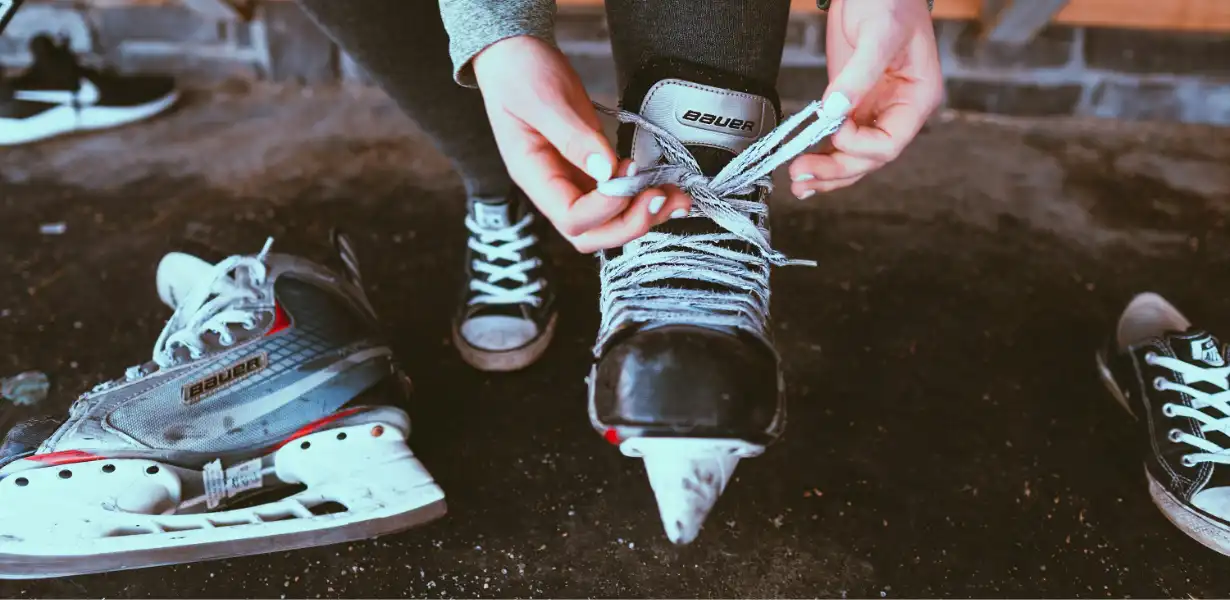
Learning how to choose hockey skates for your playing style can make a bigger difference than many players realize. The wrong setup can leave skating feeling clunky, uncomfortable, and less responsive, while the right pair can completely change how you move on the ice.
A lot of players shop by brand first, but fit and playing style matter far more than the logo stitched onto the tongue. The best skate for one player can feel terrible for another, even at the same skill level.
Choosing hockey skates is a little like choosing tires for a performance car. The wrong setup still works, but everything feels slower, less controlled, and harder than it should. The right pair almost disappears beneath you, letting your skating style take over naturally.
Fit Comes First
Before worrying about stiffness, steel, or price, focus on fit. A properly fitted skate should feel snug throughout the foot without creating painful pressure points. Your heel should stay locked in place while your toes lightly brush the toe cap when standing upright. Once you bend your knees into a skating stance, the pressure on the toes should lessen slightly.
Heel lock is especially important because loose heels waste energy during every stride. Even high-end skates feel sloppy if the foot moves around inside the boot.
Different skate lines and fit profiles are designed to accommodate different foot shapes, although modern fit systems now offer more customization than older traditional sizing models. Some skates are built for narrower feet, while others provide more width and volume for players who need additional space.
Choosing a Skate for Your Playing Style
Your skating style should heavily influence the type of skate you buy. Not every player moves the same way on the ice, and skates are designed with different movement patterns in mind.
Players who rely on speed, quick transitions, and edge work often prefer lighter, more agile skate constructions. These skates typically feel more responsive and allow sharper directional changes. Many fast, agile forwards like this style because it complements quick acceleration and strong edge control through open ice.
Players who skate with more power and stability often prefer a stiffer, more supportive boot. Many defensemen, heavier players, and strong straight-line skaters like the extra structure because it maximizes energy transfer and creates a more planted feel during physical play and shooting situations.
Recreational players often make the mistake of buying ultra-stiff elite skates simply because they assume expensive means better. In reality, mid-range skates are often a better fit for adult league and casual players because they provide more comfort, easier flex, and a shorter break-in period.
Understanding Skate Stiffness
Stiffness affects nearly every part of how a skate feels on the ice. High performance skates are designed for players who generate tremendous force through their stride. If a player does not skate with enough strength or proper mechanics, the skate can feel restrictive instead of supportive.
Overly stiff skates can make it harder to bend the knees naturally, extend strides fully, or feel connected to the ice. Some players even develop lace bite or foot pain because the boot simply does not flex with their movement.
The ideal skate should support your stride without feeling overly restrictive or uncomfortable.
Blade Steel and Profiling Matter More Than Most Players Realize
The steel underneath the skate quietly affects performance every single shift. Higher-quality steel typically holds an edge longer and can provide a more consistent feel over time.
Profiling changes the blade shape to emphasize different skating characteristics. Some profiles improve agility and quick turns, while others favor straight-line speed and balance. Smaller radius profiles generally feel more nimble, while larger profiles create more glide and stability.
Many experienced players upgrade steel or experiment with profiling long before replacing the skate boot itself because the difference can be surprisingly noticeable.
Skate Pitch Changes Your Stance
Some skates naturally pitch players forward into a more aggressive skating position, while others feel more neutral and balanced.
Forward-pitched setups can help with acceleration and quick transitions because they encourage an athletic skating posture. Neutral setups tend to feel steadier and are often preferred by players who prioritize balance and defensive positioning.
This is one reason two skates that appear similar on the shelf can feel completely different once they hit the ice.
Baking and Break-In Are Part of the Process
Most mid-range and high-end modern hockey skates are heat moldable, which allows the boot to shape itself more closely around the foot. Baking skates can dramatically improve comfort, reduce pressure points, and create a more secure fit.
Even after baking, skates still need time to break in properly. The first few skates may feel awkward while the materials settle and adapt to your movement patterns.
A properly broken-in skate eventually starts to feel less like equipment and more like an extension of your stride.
Don’t Overvalue Skate Weight
Manufacturers love marketing ultra-lightweight skates, but most players benefit far more from proper fit and balance than shaving a few grams off the boot.
A skate that fits perfectly and supports your skating style will outperform a lighter skate that causes instability or discomfort. Once gameplay speeds up, edge control and stride efficiency matter much more than tiny weight differences.
Buy for Your Actual Skill Level
It’s tempting to buy the same skate used by NHL players, but elite skates are built for elite skating forces. Intermediate and performance-level skates often provide the best combination of comfort, support, durability, and value for most players.
For many recreational players, comfort and proper flex are more beneficial than maximum stiffness.
Finding the Right Feel on the Ice
The right hockey skate should make skating feel natural, balanced, and connected. You should feel confident digging into edges, accelerating through turns, and transferring power through each stride without fighting the boot itself.
When the fit, stiffness, and skating style all line up correctly, the skate disappears from your mind entirely. That’s usually the moment players realize they finally found the right pair.