
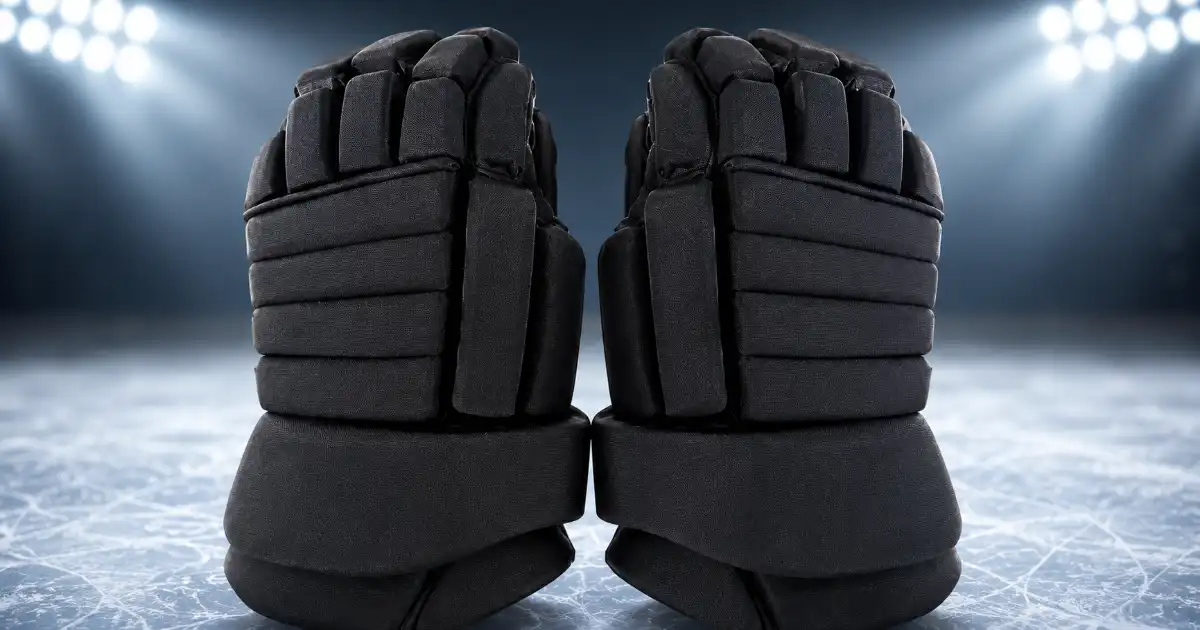
How should hockey gloves fit? It’s one of the most common questions players ask when buying new equipment. A properly fitting pair protects your hands while allowing the natural movement needed for shooting, passing, and stickhandling. Gloves that are too big or too small can affect both safety and performance, making it important to choose the correct size and fit before you hit the ice.
Here’s how to find the right fit.
Why Hockey Glove Fit Matters
Your hands are constantly moving during a game. Every pass, shot, poke check, and stickhandle depends on having enough freedom to move naturally while still keeping your fingers, knuckles, and wrists protected.
Well-fitting hockey gloves improve stick control, allow for a more natural shooting motion, and keep the protective padding positioned where it is intended to absorb slashes, blocked shots, and accidental contact. They also reduce unnecessary movement inside the glove, making your hands feel more connected to your stick throughout the game. The goal is to find a pair that feels secure without feeling restrictive.
Your Fingers Should Reach the Ends
One of the easiest ways to judge hockey glove fit is by checking where your fingertips sit inside the glove. They should lightly touch or come very close to the ends of the finger stalls without being pressed firmly against them. At the same time, there should not be a large amount of empty space beyond your fingertips, as excessive room can reduce stick control, allow the glove to shift during play, and lessen its protective effectiveness. If your fingers are jammed against the ends, the gloves are too small, while noticeable extra space usually indicates they are too large.
Your Palm Should Sit Naturally
The palm should line up comfortably with your hand so you can maintain a natural grip on your stick. When you close your hand around the shaft, the palm material should lie flat without bunching or folding excessively. Your hand should also stay in place rather than sliding forward or backward inside the glove. A properly fitting palm improves puck feel and allows the glove to flex naturally as you pass, shoot, and stickhandle.
Check Wrist Mobility
Modern hockey gloves are designed with segmented cuffs that balance protection with mobility. As you try on a pair, rotate your wrists, simulate taking a wrist shot, and mimic normal stickhandling movements. Your wrists should move freely without the cuff interfering with your range of motion or leaving more of your wrist exposed than necessary. Comfortable wrist mobility is essential because so much of your shooting and stickhandling relies on unrestricted movement.
The Gloves Should Feel Secure, Not Tight
Many players assume tighter gloves automatically provide better control, but that is not necessarily true. The glove should hold your hand securely without squeezing your fingers or creating uncomfortable pressure across your knuckles. You should be able to fully open and close your hand naturally, and the glove should remain in place without feeling restrictive. Keep in mind that your hands may swell slightly during games, so a glove that already feels overly tight in the store may become uncomfortable during a full practice or game.
Consider Your Preferred Fit Profile
Not every hockey glove is designed to fit the same way. Traditional-fit gloves provide more room throughout the fingers, backhand, and cuff, making them popular with players who value comfort and a looser feel. Tapered-fit gloves are snugger through the fingers and backhand while remaining more open around the cuff, giving many players a balance between control and mobility. Contoured-fit gloves wrap closely around the entire hand and are often preferred by players who want the glove to feel as connected to their stick as possible. None of these styles is universally better than another, so choosing the right fit often comes down to personal preference.
Don’t Ignore the Palm Material
While sizing is the most important factor, the palm material also plays a significant role in how a glove feels on the ice. Different palm constructions can emphasize stick feel, durability, softness, or grip in wet conditions. Two gloves that fit exactly the same may feel very different simply because of the materials used in the palm. Finding a combination of the right fit and a palm that matches your playing style can make a noticeable difference in comfort over the course of a season.
Try Them With Your Hockey Stick
If possible, always hold your hockey stick while trying on new gloves. This is one of the easiest ways to identify potential fit issues before you buy them. As you grip the stick, pay attention to how easily you can rotate your top hand, slide your lower hand, and fully close your fingers around the shaft. A glove may seem comfortable when your hands are at rest, but actually holding your stick often reveals whether the fit supports natural movement and good control.
Don’t Buy Gloves to “Grow Into”
This advice is especially important for younger players. Gloves that are significantly oversized can reduce stick control, shift during contact, and leave protective padding out of position when it is needed most. Choosing gloves that fit properly from the beginning helps young players develop better stickhandling habits while also providing the level of protection the equipment was designed to deliver.
Finding the Right Balance
The best hockey gloves are the ones you barely notice once the game begins. They provide the protection your hands need while allowing every pass, shot, and stickhandling move to feel natural and controlled. When your fingertips reach the ends comfortably, your palm sits securely in place, your wrists move freely, and the gloves match your preferred fit style, you can focus on playing instead of adjusting your equipment. A few extra minutes spent finding the right fit can pay off all season long with better comfort, more consistent stick control, and protection that stays where it’s supposed to be.