Few moments in hockey create more confusion than a goal celebration suddenly ending with officials huddled around a monitor. Fans cheer, players line up for the faceoff, and then everything stops because of a possible goalie interference review.
A few minutes later, the goal either counts or disappears. Half the arena is furious. The other half thinks the officials got it wrong too.
If you have ever wondered why these calls create so much debate, you are not alone. Understanding what is goaltender interference sounds simple at first, but the reality is much more complicated once bodies start crashing around the crease at full speed.
The NHL rulebook outlines guidelines for goalie interference, yet every season produces controversial reviews that spark arguments across broadcasts, social media, and locker rooms. That is because the rule depends heavily on judgment, context, positioning, and timing rather than one simple standard.
What Is Goaltender Interference?
At its core, goaltender interference happens when an attacking player prevents the goalie from doing their job.
That can include:
- Making illegal contact with the goalie
- Preventing the goalie from moving freely
- Blocking the goalie from resetting for a save
- Interfering with the goalie’s ability to track the puck
The problem is that hockey is chaotic around the net. Players are screening, fighting for rebounds, getting cross-checked, losing edges, and colliding within fractions of a second. Officials have to decide whether the contact was legal, unavoidable, or enough to affect the play.
That is where the controversy begins.
The Crease Is Hockey’s Most Chaotic Area
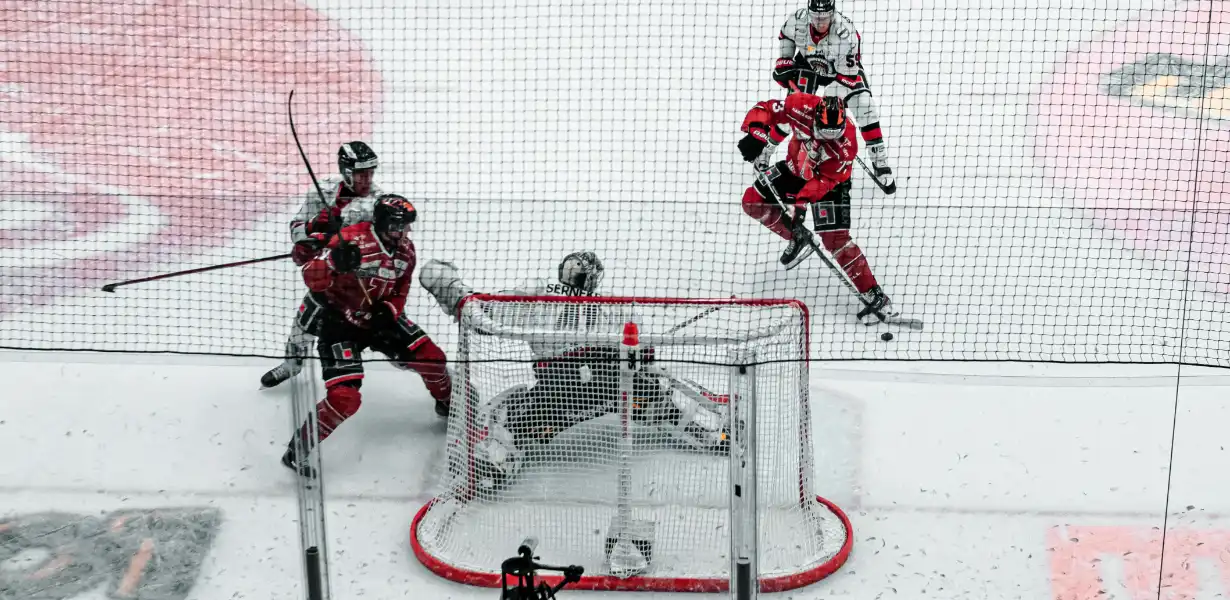
Most goalie interference calls happen around the blue paint in front of the net. This area is crowded almost every shift, especially during rebounds and deflections.
Forwards want to create traffic in front of the goalie because screened goalies are easier to beat. Defensemen are trying to clear attackers away from the crease. Meanwhile, the goalie is attempting to track the puck through layers of bodies and sticks.
The result is organized chaos.
One tiny bump can change whether a goalie gets across the crease in time to make a save. Other times, goalies get hit harder and still stop the puck cleanly. Officials must determine whether the contact actually prevented the save attempt.
That makes every review feel subjective.
Why Similar Plays Get Different Calls
One of the biggest frustrations for fans is seeing what looks like the same play produce two different rulings.
A player may brush the goalie on one goal and the score counts. The next night, nearly identical contact leads to a disallowed goal.
The difference usually comes down to details that are easy to miss at full speed.
Officials consider things like:
- Who initiated the contact
- Whether the goalie was inside the crease
- Whether the attacking player tried to avoid contact
- Whether a defender pushed the attacker
- Whether the goalie still had a chance to make the save
Those small differences matter, but they are not always obvious during a live broadcast.
That inconsistency is why goalie interference has earned a reputation as the most confusing rule in hockey.
Legal Screens vs Illegal Contact
This is where many fans get tripped up when learning what is goaltender interference.
Screening the goalie is legal. In fact, it is one of the most important offensive strategies in hockey. Players are allowed to stand in front of the net and block the goalie’s vision as long as they do not illegally interfere with movement.
The line gets blurry when contact enters the equation.
A player standing near the crease without touching the goalie is usually fine. But if that same player backs into the goalie’s pads or prevents lateral movement during a save attempt, officials may wave the goal off.
The NHL wants to allow offensive pressure around the crease while still protecting goalies from unfair contact. Balancing those two things is incredibly difficult in real time.
Goalies still receive protection outside the crease, though officials generally allow more incidental contact once they move beyond the blue paint.
Replay Reviews Made the Rule Even More Complicated
Coach’s challenges changed everything.
Before replay reviews, officials made the call live and the game moved on. Now every close goal involving crease traffic can turn into a lengthy video review.
Slow-motion replay often makes contact look worse than it appeared at game speed. A small skate clip or slight bump suddenly gets analyzed from six different camera angles.
Sometimes replay helps officials correct obvious mistakes. Other times it creates even more confusion because fans can watch the same replay repeatedly and still disagree about the outcome.
This is one reason many hockey fans feel goalie interference reviews lack consistency. The rule depends heavily on interpretation, and replay cannot eliminate that subjectivity.
Did the Goalie Actually Have a Chance?
This may be the biggest factor officials consider during reviews.
Incidental contact alone does not automatically erase a goal. Officials also ask whether the goalie realistically could have made the save without the interference.
That sounds straightforward until replay enters the picture.
Maybe the goalie was already out of position. Maybe the shot was unstoppable anyway. Maybe the goalie lost an edge before contact occurred. Maybe a defender caused the collision.
Officials must sort through all of those variables before making a decision.
That is why some goals survive reviews despite clear contact, while others get overturned after what appears to be only minor interference.
Fans, Players, and Coaches Rarely Agree
Goaltender interference debates usually continue long after the game ends.
Fans naturally interpret the play through the lens of their favorite team. Broadcasters often disagree with officiating decisions on live television. Even former NHL players regularly split on whether a goal should count.
Coaches face difficult decisions too. Challenging a goal for interference carries risk because failed challenges lead to penalties for delay of game.
That forces coaches to decide whether the odds of overturning the goal outweigh the danger of putting the opponent on the power play.
In close games, those decisions can completely change momentum.
Goalies Have Adapted Too
Modern NHL goalies understand how closely interference plays are reviewed.
Goalies will often react immediately after contact to draw attention to possible interference. Others immediately look toward referees after a goal hoping for a review.
Crease traffic is genuinely dangerous and chaotic. Even slight disruptions can affect positioning, balance, or vision enough to impact a save attempt.
Why the Rule Probably Will Never Stop Being Controversial
The NHL continues adjusting replay standards and review procedures, but goalie interference will likely always create arguments.
The sport moves too quickly for every crease collision to fit neatly into one category. Hockey relies on flow, physicality, and split-second reactions. That naturally creates gray areas around the net.
The league also wants offense to thrive while still protecting goalies. If officials call interference too tightly, it removes net-front battles from the sport. If they allow too much contact, goalies lose fair opportunities to make saves.
Finding the perfect balance is almost impossible.
Final Buzzer
Learning what is goaltender interference helps explain why some of hockey’s biggest moments turn into heated debates.
The rule sounds simple in theory, but real games are rarely simple. Traffic around the crease creates split-second collisions, limited sightlines, and difficult judgment calls that replay still cannot fully solve.
That combination of speed, contact, and interpretation is exactly why goalie interference remains the most confusing rule in hockey.
And honestly, that confusion is probably never going away.