
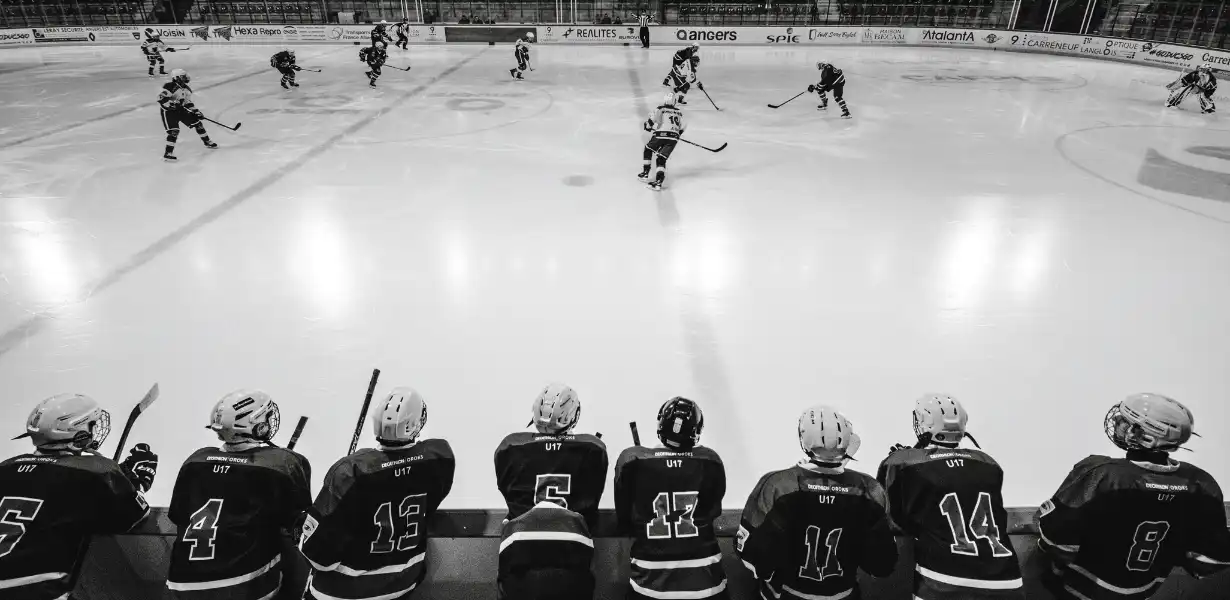
When discussing sports built around collaboration and trust, hockey often rises to the top of the list. Few sports require the same level of coordination, communication, and selfless play that hockey demands. Every player on the ice must move as part of a synchronized unit, constantly reading teammates and reacting in real time.
Unlike many other sports where individual players can dominate possession for extended periods, hockey thrives on fluid motion and shared responsibility. From defensive zone coverage to offensive rushes, every shift requires multiple players executing their roles perfectly.
Because of this constant cooperation and strategic movement, many athletes, coaches, and fans consider hockey to be the ultimate team sport.
The Speed of the Game Requires Constant Teamwork
One major reason hockey stands apart is the speed at which the game unfolds. Hockey is one of the fastest sports in the world, and players often have only fractions of a second to make decisions.
Because the puck moves quickly and the ice surface allows rapid transitions, players cannot rely on individual efforts alone. Instead, they must depend on teammates being in the right position at the right moment.
For example:
• Defensemen must trust forwards to backcheck.
• Forwards rely on defensemen to control the blue line.
• Goalies depend on defenders to clear rebounds and block shots.
Without constant teamwork, defensive breakdowns happen instantly. Offensive opportunities also require coordinated passes, positioning, and timing.
This shared responsibility is a defining characteristic of hockey.
Every Position Is Interconnected
Another reason hockey earns the title of ultimate team sport is how deeply interconnected every position is. Unlike some sports where roles are more isolated, hockey positions constantly overlap and support each other.
Forwards
Forwards focus on scoring and offensive pressure, but they also play a major role in defense. Backchecking, forechecking, and supporting defenders are essential parts of their job.
Defensemen
Defensemen protect the defensive zone and move the puck up ice, but they also contribute to offensive plays by keeping the puck in the zone and joining rushes when opportunities arise.
Goalies
Goalies anchor the entire defensive structure. Their communication helps defenders organize coverage, while their saves give teammates the confidence to push forward.
Success depends on each role functioning within a larger system. One player’s mistake can affect the entire team structure.
Line Changes Reinforce Team Unity
Hockey’s unique system of line changes further emphasizes teamwork. Players typically stay on the ice for shifts lasting around 30–60 seconds before rotating off the ice for fresh teammates.
Because of this constant rotation, teams must operate as cohesive units rather than relying on one group of players. Each line must maintain the same level of intensity and execution.
This structure means:
• Energy is shared across the roster.
• Strategies remain consistent across different lines.
• Success depends on contributions from every player.
The shift-based system makes hockey one of the most collaborative sports in the world.
Communication Is Essential
Clear communication is another cornerstone of hockey. With the speed and noise of the arena, players must constantly talk, signal, and anticipate each other’s actions.
Common communication elements include:
• Defensemen calling for puck support
• Goalies directing defensive positioning
• Players alerting teammates to incoming pressure
• Line mates coordinating passes and plays
Even subtle signals, like stick positioning or skating direction, act as communication tools.
Teams that communicate effectively develop stronger chemistry and perform at a higher level, reinforcing the importance of teamwork in hockey.
Systems and Strategy Depend on Team Execution
Hockey coaches design complex systems that rely on all players executing specific responsibilities. These strategies might include:
• Forechecking systems
• Defensive zone coverage
• Neutral zone traps
• Power play formations
• Penalty killing strategies
None of these systems function without coordinated teamwork.
For example, a forechecking strategy might require one player pressuring the puck carrier while two teammates cut off passing lanes. If even one player fails to execute their role, the entire system breaks down.
This dependence on coordinated execution is why hockey emphasizes collective effort over individual play.
Trust Between Teammates Builds Strong Teams
Trust is one of the most powerful elements behind hockey. Players must trust their teammates to cover defensive zones, finish passes, and support plays.
This trust develops through practice, shared experiences, and understanding each other’s tendencies on the ice.
When teams trust one another:
• Players make quicker decisions.
• Passing becomes more precise.
• Defensive coverage becomes stronger.
• Offensive plays develop more smoothly.
The strongest hockey teams are often those with the deepest sense of trust and unity.
Hockey Teaches Life Skills Through Teamwork
The lessons learned through hockey extend far beyond the rink. Hockey players develop valuable life skills through their team experiences.
These include:
• Leadership
• Accountability
• Discipline
• Communication
• Resilience
Because success in hockey depends on group effort, players learn early that teamwork leads to better outcomes than individual achievement alone.
These skills translate into success in school, careers, and community leadership.
The Culture of Hockey Reinforces Team First Mentality
Hockey culture itself reinforces the values of the ultimate team sport. From youth leagues to professional organizations, players are taught that team success always comes first.
Key cultural traditions include:
• Celebrating assists just as much as goals
• Supporting teammates after mistakes
• Blocking shots to protect the team
• Playing through adversity together
These traditions emphasize the collective nature of the sport and create a sense of shared responsibility.
The emphasis on humility and teamwork is one of the reasons hockey players are widely respected across the sports world.
Hockey Truly Is the Ultimate Team Sport
When examining the elements that define collaboration in athletics, it becomes clear why many consider hockey to be unmatched. The game demands constant communication, shared responsibility, trust, and strategic coordination.
From rapid line changes to interconnected positions and complex systems, hockey requires every player to contribute to a common goal. No single player can control the outcome alone.
This powerful blend of speed, strategy, and unity is what makes hockey such a remarkable example of teamwork in sports.
For players and fans alike, hockey represents more than competition—it represents the strength that comes from working together.