
When it comes to hockey culture, few debates spark more passion than the way players are evaluated. One thing is clear across locker rooms, arenas, and analytics departments: why goalies are judged differently than skaters is rooted in the very structure of the game itself.
From save percentage scrutiny to playoff narratives, goaltenders live in a world of microscopic analysis. Meanwhile, forwards and defensemen are often evaluated in broader strokes. In this article, we break down the psychology, statistics, and structural reasons behind why goalies are judged differently than skaters — and why that difference continues to shape hockey conversations.
Why Goalies Are Judged Differently Than Skaters in Hockey
To understand why goalies are judged differently than skaters, you first have to understand how drastically different their responsibilities are.
A forward can have a quiet night and still contribute with defensive coverage, puck retrieval, or creating space. A defenseman can miss an assignment but recover with positioning or physical play. But when a goalie makes a mistake, it can directly lead to a goal, and that visibility heavily influences how they are judged.
In hockey, mistakes at the crease often carry immediate scoreboard consequences.
A skater’s error might blend into a shift change or team breakdown. A goalie’s mistake can result in a goal that becomes part of the game’s permanent record.
The Statistical Spotlight: Save Percentage vs. Points
One major reason why goalies are judged differently than skaters is the clarity of their statistical measurement.
For skaters, production is multifaceted:
• Goals
• Assists
• Plus/minus
• Shot metrics and possession analytics
• Faceoff percentage (for centers)
Their overall value can be interpreted through multiple lenses.
Goalies, however, are commonly evaluated using:
• Save percentage
• Goals-against average
• Shutouts
• Wins
While advanced analytics like expected goals against (xGA) are increasingly used to account for shot quality and defensive context, public discourse still leans heavily on traditional metrics.
Because .900 save percentage is a widely cited benchmark, falling below it over a meaningful stretch often becomes a talking point, particularly in competitive markets.
This reliance on visible, simplified metrics contributes to why goalies are judged differently than skaters.
The Isolation Factor in the Crease
Another key reason why goalies are judged differently than skaters is isolation.
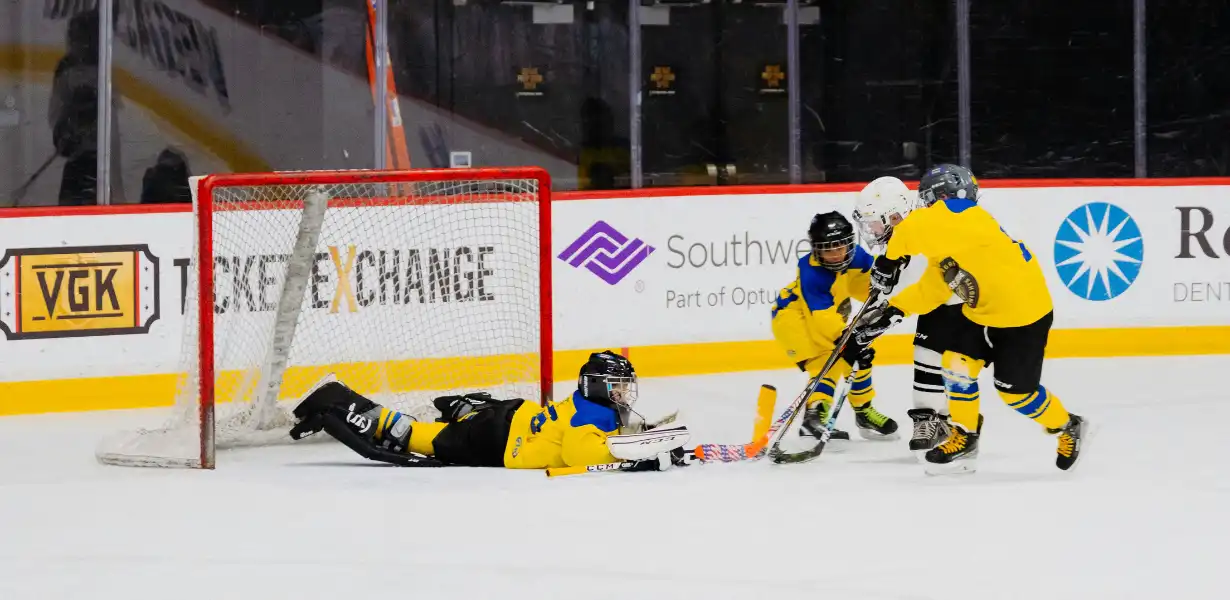
Goalies operate alone within the crease. They do not rotate lines every 40–60 seconds like forwards. They remain on the ice for nearly the full game. When a breakaway develops, attention naturally shifts to one player.
In those moments, the goalie represents the final defensive layer.
When a team wins 5–4, offensive production often dominates headlines. When a team loses 2–1, the goaltender’s performance frequently becomes central to postgame analysis.
That isolation amplifies both praise and criticism.
The Psychological Weight of the Position
The mental demands placed on goaltenders also help explain why goalies are judged differently than skaters.
A forward can miss several scoring chances and continue attacking. A goalie must reset immediately after allowing a goal — especially one that appears preventable.
There is no shift change to step away from the moment.
Goalies are expected to demonstrate:
• Short memory
• Sustained concentration
• Emotional composure
• Consistency under pressure
When a goalie struggles, commentary often focuses on confidence and mental sharpness. Skaters, by contrast, are more frequently discussed in terms of line chemistry or system fit.
Playoff Performance and Legacy
If you want a clear example of why goalies are judged differently than skaters, look at playoff hockey.
Historically, postseason play often trends toward tighter defensive structure and narrower scoring margins, increasing the perceived impact of goaltending performance.
A goalie can carry strong form through multiple rounds and become central to a team’s success narrative. Conversely, a difficult series can significantly influence public perception.
In the playoffs, offensive struggles are typically distributed across lines. Goaltending outcomes, however, are frequently analyzed as pivotal turning points.
Team Dependency vs. Individual Accountability
While hockey is fundamentally a team sport, goaltending is often perceived through an individual lens.
Skaters influence each other continuously through coordinated systems, passing sequences, and defensive coverage. Goaltenders react within that structure, and their performance is heavily influenced by shot quality, defensive breakdowns, and special teams situations.
Despite that context, evaluation often isolates the goalie’s statistical output.
A forward producing on a struggling team may be praised for individual effort. A goalie behind a defensively inconsistent roster may post lower numbers and face scrutiny, even when underlying factors contribute significantly.
This dynamic reinforces why goalies are judged differently than skaters in media coverage and fan analysis.
The Equipment and Identity Factor
Goaltenders are visually distinct:
• Specialized masks
• Larger protective equipment
• Unique stance and movement patterns
• Position-specific stick design
Their technical demands differ substantially from skaters, focusing on angles, rebound control, and crease management.
From youth development onward, goaltenders typically receive position-specific training and instruction. That separation in development further reinforces why goalies are judged differently than skaters throughout their careers.
Media Narratives and Highlight Culture
In today’s highlight-driven environment, goals against are frequently replayed from multiple angles. Positioning, glove placement, and puck tracking are dissected in real time.
For skaters, highlights often celebrate scoring plays. For goaltenders, analysis often centers on goals allowed.
This visibility shapes public evaluation. A remarkable glove save can shift momentum and perception. A stoppable shot finding the net can quickly become a focal discussion point.
The permanence of video review intensifies scrutiny.
Final Buzzer
At its core, why goalies are judged differently than skaters comes down to visibility, statistical clarity, isolation, and narrative weight.
Goalies occupy hockey’s most scrutinized position. Their successes are highly visible. Their mistakes are measurable. Their performance is frequently tied directly to outcomes on the scoreboard.
Skaters distribute responsibility across lines and systems. Goalies often carry the perception of singular accountability.
Different responsibilities. Different context. Different standards.
And that contrast remains one of the defining psychological and analytical elements of hockey.