
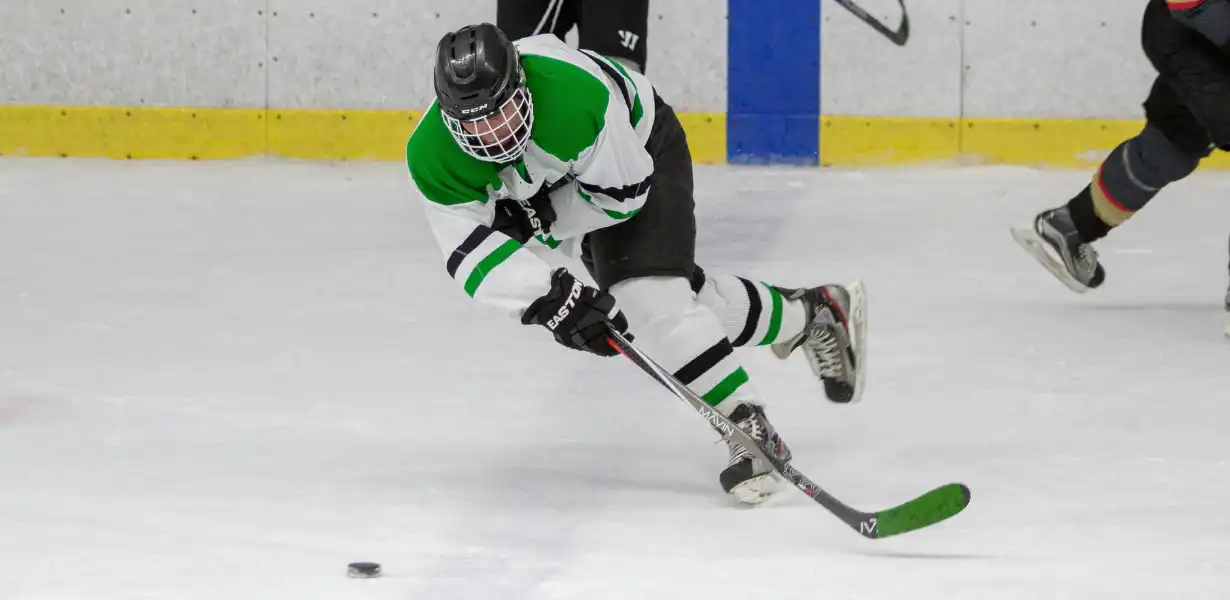
In hockey, speed can separate good players from great ones, but only if it comes with control. Charging up the ice at full throttle means little if you lose the puck, blow past your angle, or miss your opportunity. The real edge comes from building speed without sacrificing control in hockey, blending explosiveness with precision.
Players who master this balance dominate transitions, maintain possession under pressure, and execute plays at top pace. This article breaks down exactly how to develop that combination, using practical techniques that translate directly onto the ice.
Why Speed Alone Isn’t Enough
Speed is one of the most sought-after skills in hockey, but uncontrolled speed leads to turnovers, missed passes, and poor positioning. Elite players understand that speed must work with control, not against it.
When you focus on hockey speed and control, you gain:
• Better puck possession under pressure
• Cleaner zone entries
• Faster decision-making
• Stronger balance through contact
The goal isn’t just to skate fast, it’s to stay composed and effective at that speed.
The Foundation: Edge Control and Balance
Before increasing speed, you need a solid base. Edge control is the backbone of skating efficiency and stability.
Key Elements of Edge Control
• Inside and outside edge awareness
• Smooth weight transfer
• Controlled turns and transitions
• Stability during lateral movement
Strong edges allow you to accelerate, decelerate, and change direction without losing balance. Without this, speed becomes unpredictable and difficult to manage.
Drill Focus
• Tight turns at varying speeds
• One-leg balance drills
• Figure-eight skating patterns
Mastering edges ensures that as your speed increases, your control stays intact.
Efficient Stride Mechanics
Speed doesn’t just come from effort—it comes from efficiency. A powerful stride maximizes energy while maintaining stability.
Components of an Effective Stride
• Full extension through each push
• Proper knee bend for power generation
• Quick recovery under the body
• Controlled upper body posture
Avoid overstriding or rushing your steps. Smooth, powerful strides generate more speed while keeping you balanced and ready to react.
Stickhandling at High Speed
One of the biggest challenges players face is maintaining puck control while skating fast. This is where coordination and touch come into play.
Tips for Better Stickhandling at Speed
• Keep the puck close to your body
• Use soft hands rather than exaggerated movements
• Practice handling the puck without looking down
• Adjust hand positioning for stability
The faster you move, the smaller and more controlled your stickhandling motions should become. Large movements slow you down and increase the risk of losing the puck.
Vision and Awareness
Speed without awareness leads to rushed decisions. When you’re moving quickly, your ability to read the ice becomes even more critical.
Improve On-Ice Awareness
• Keep your head up at all times
• Scan the ice before receiving the puck
• Anticipate plays instead of reacting late
• Communicate with teammates
Players who excel at building speed without sacrificing control process the game faster mentally, not just physically.
Agility and Direction Changes
Straight-line speed is useful, but hockey is a game of constant direction changes. Agility allows you to stay in control while adjusting your path.
Agility Training Focus
• Quick pivots and transitions
• Lateral crossovers
• Stop-and-start acceleration drills
• Reaction-based skating exercises
Being agile ensures that your speed is functional. You’re not just fast—you’re adaptable.
Strength and Conditioning for Control
Off-ice training plays a huge role in maintaining control at high speeds. Strength, especially in the lower body and core, stabilizes your movements.
Key Areas to Train
• Core strength for balance
• Leg power for acceleration
• Hip mobility for stride efficiency
• Stability exercises for injury prevention
A strong foundation allows you to handle physical contact and maintain control even at top speed.
Mental Composure at High Speed
As your pace increases, the game feels faster. Staying calm under pressure is what separates controlled speed from chaotic play.
Mental Strategies
• Focus on breathing to stay relaxed
• Trust your training and instincts
• Slow the game down mentally
• Avoid forcing plays
Controlled players don’t panic—they execute.
Practice Methods That Build Both Speed and Control
To truly improve, your training must combine both elements simultaneously.
Effective Training Approaches
• Combine skating drills with puck control
• Add decision-making elements to drills
• Practice under pressure situations
• Gradually increase speed while maintaining technique
For example, skating drills that incorporate puck handling and quick passing simulate real-game scenarios and reinforce control at speed.
Common Mistakes to Avoid
When working on improve skating speed hockey, players often fall into traps that hinder progress.
Mistakes
• Sacrificing technique for speed
• Looking down at the puck
• Overhandling instead of simplifying movements
• Ignoring balance and posture
Correcting these mistakes ensures consistent improvement.
Bringing It All Together
Building speed without sacrificing control in hockey is about integration. Skating, puck handling, awareness, and strength must all work together.
Players who develop this balance:
• Move efficiently across the ice
• Maintain possession under pressure
• Execute plays with precision
• Adapt quickly to changing situations
This is the difference between simply being fast and being effective.
Final Buzzer
Mastering building speed without sacrificing control in hockey takes time, repetition, and attention to detail. It’s not about pushing harder, it’s about refining your technique so every movement is purposeful.
When speed and control come together, your entire game transforms. You become harder to defend, more reliable with the puck, and more impactful in every shift.
Keep training with intention, stay focused on fundamentals, and your performance will reflect it every time you step on the ice.