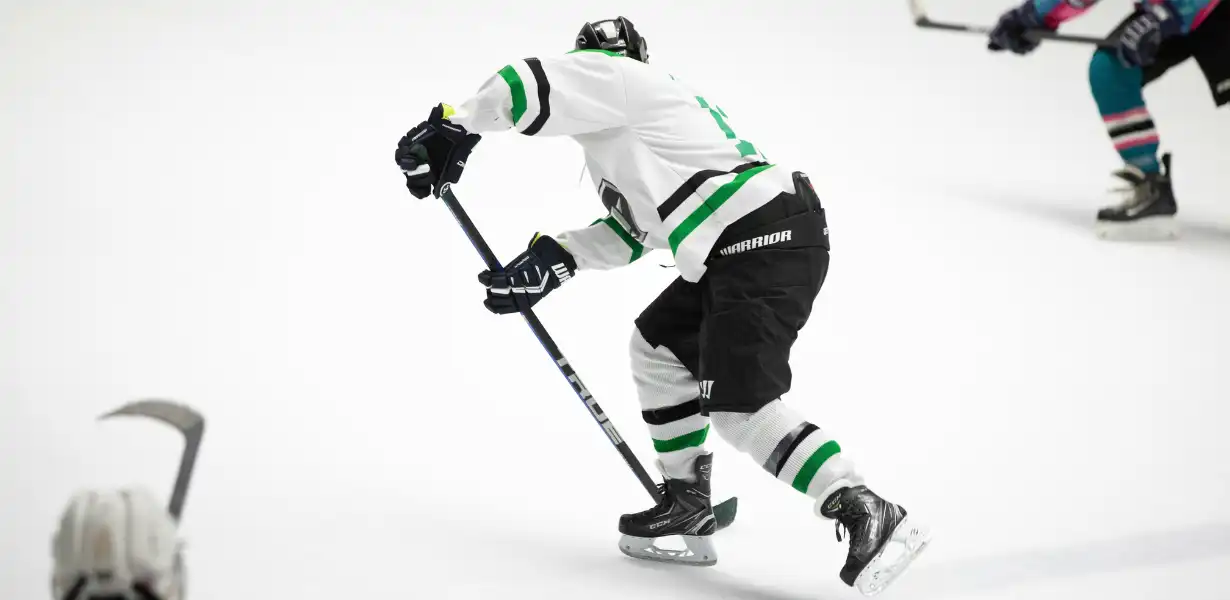
Hockey is built on speed, strength, and precision, but one skill quietly drives all of them: balance. The ability to stay stable while accelerating, turning, battling along the boards, or releasing a quick shot separates strong players from great ones. That’s why balance training has become a core part of modern skill development.
Every stride on the ice happens on a thin blade, often while moving at high speed and under pressure from opponents. Strong balance allows players to stay upright through contact, control the puck in tight spaces, and maintain powerful skating mechanics. With the right balance training routine, players can sharpen edge control, improve agility, and gain confidence during fast-paced play.
This guide explores why balance training matters, how it improves performance, and which drills help hockey players build stability and control.
Why Balance Matters in Hockey
Balance sits at the center of nearly every movement in hockey. Skating requires constant shifts in body weight, controlled edge pressure, and quick transitions between forward and backward movement.
When a player has strong balance:
• Skating becomes more efficient. Power transfers cleanly from legs to ice.
• Edge control improves. Players carve sharper turns and transitions.
• Puck protection strengthens. Stability helps maintain control during physical battles.
• Shot mechanics stay consistent. A balanced stance produces stronger releases.
Without proper balance, players waste energy correcting their stance, lose speed in transitions, and struggle to maintain control during contact.
Balance training focuses on strengthening the muscles responsible for stabilization, especially the core, hips, glutes, and ankles. These muscle groups work together to keep a player centered over their skates during rapid movement.
Key Muscles Used in Hockey Balance
To understand balance training for hockey players, it helps to know which muscles drive stability on the ice.
Core Muscles
The core stabilizes the torso and connects upper and lower body movement. A strong core keeps players upright during quick direction changes and heavy contact.
Glutes and Hips
The glutes power skating strides and help maintain control while shifting weight between skates. Strong hips also support deep knee bends, which are critical for balance.
Ankles and Lower Legs
Ankle stability controls the angle of the skate blade on the ice. Small adjustments in this area allow players to maintain edge pressure and stay balanced while turning or stopping.
Inner Thighs
These muscles help maintain skating posture and assist with lateral movement.
Training these areas together builds a foundation for powerful, stable skating.
Benefits of Balance Training for Hockey Players
Consistent balance work delivers several performance advantages.
Improved Edge Control
Edge control allows players to glide smoothly, carve tight turns, and stop quickly. Balance training strengthens stabilizing muscles that support these movements.
Stronger Skating Stride
A stable stance allows players to push harder through each stride. This leads to faster acceleration and more powerful skating.
Better Puck Protection
Hockey is a physical sport. Players constantly battle along the boards and in front of the net. Strong balance helps maintain puck control even when absorbing contact.
Faster Direction Changes
Quick cuts and pivots require precise weight transfer. Balance training improves body awareness, making these movements smoother and faster.
Injury Prevention
Stable joints reduce strain on knees and ankles. Many hockey injuries occur during awkward landings or sudden direction changes. Better balance lowers this risk.
Off-Ice Balance Training Drills
Off-ice workouts provide an excellent environment for balance training. These exercises mimic skating movements while strengthening stabilizing muscles.
Single-Leg Squats
Single-leg squats simulate the skating stride and challenge balance at the same time.
How to perform:
1. Stand on one leg.
2. Lower into a squat while keeping the chest upright.
3. Extend the other leg slightly forward.
4. Return to standing.
This drill strengthens glutes, quads, and stabilizing muscles.
Balance Board Training
Balance boards create instability that forces muscles to react quickly.
Players stand on the board and maintain control while shifting weight side to side. This mimics edge adjustments during skating.
Adding stickhandling drills while balancing increases coordination and stability.
Lateral Bounds
Lateral bounds develop explosive power and balance during side-to-side movement.
Steps:
1. Start on one leg.
2. Jump sideways and land on the opposite leg.
3. Hold the landing position for a moment.
This exercise mirrors skating pushes and improves stability after powerful strides.
Single-Leg Deadlifts
This movement strengthens the posterior chain and improves balance.
How it works:
1. Stand on one leg.
2. Lean forward while extending the other leg behind.
3. Lower weights toward the floor.
4. Return to standing.
It builds strength in hamstrings and glutes while challenging stability.
On-Ice Balance Training Drills
While off-ice exercises are valuable, balance must also be trained directly on the ice.
One-Foot Glides
This classic skating drill builds edge awareness.
Players glide down the ice on one skate while maintaining a deep knee bend and stable posture. Switching legs trains both sides equally.
Tight Turns and Edge Work
Practicing tight circles and controlled turns strengthens edge control and balance.
Players focus on:
• Deep knee bends
• Controlled body lean
• Smooth weight transfer
These movements develop strong skating mechanics.
Resistance Skating
Using resistance bands or weighted sleds forces players to maintain strong posture and balance during strides.
This drill strengthens skating muscles while reinforcing proper body alignment.
Combining Balance With Stick Skills
One effective approach in balance training for hockey players is combining stability exercises with puck control.
For example:
• Stickhandle while standing on one leg
• Perform passing drills on a balance board
• Practice shooting after a balance-focused movement
These drills train the body to maintain control under unstable conditions.
During skill work, using a hockey stick allows players to focus on balance and puck feel while practicing controlled movements.
Weekly Balance Training Plan
A balanced training schedule keeps progress steady without overtraining.
Example weekly routine:
Day 1 – Off-Ice Stability
• Single-leg squats
• Balance board stickhandling
• Core plank variations
Day 2 – On-Ice Edge Work
• One-foot glides
• Tight turns
• Controlled crossovers
Day 3 – Power and Balance
• Lateral bounds
• Single-leg deadlifts
• Resistance skating
Even short sessions, repeated consistently, improve stability over time.
Tips for Better Balance Development
To get the most out of balance training, keep these tips in mind.
Focus on Knee Bend
Deep knee bends lower the center of gravity and improve stability.
Keep the Core Engaged
A tight core keeps the upper body steady during movement.
Train Both Sides
Hockey players often favor one side. Balanced training prevents weaknesses.
Start Slow
Balance exercises should begin at a controlled pace before adding speed or resistance.
Final Buzzer
Balance is one of the most overlooked skills in hockey training, yet it drives nearly every movement on the ice. From powerful skating strides to tight puck protection, stability allows players to perform at a higher level.
Through consistent balance training for hockey players, athletes develop stronger edge control, smoother transitions, and greater confidence during high-speed play. By combining off-ice stability exercises with on-ice edge drills, players can sharpen their control and stay solid in every shift.
Strong balance builds the foundation for faster skating, sharper turns, and better puck handling, skills that keep players steady and ready when the puck drops.