Hockey gear fit matters more than many players realize. Equipment that is too loose, too tight, too short, or too bulky can affect comfort, protection, skating, stickhandling, and confidence on the ice. Good gear should let you move naturally while still covering the areas it is designed to protect.
Poorly fitting equipment can sneak up on players. Kids grow. Adult players lose or gain weight. Padding breaks down. Straps stretch out. Skates soften. What felt fine last season may feel awkward, painful, or unsafe now.
Here are the biggest signs your hockey gear does not fit properly, plus what each problem may mean.
Your Hockey Gear Fit Feels Restrictive
Hockey equipment should feel secure, not like a medieval soup can. If your shoulder pads, pants, elbow pads, or shin guards stop you from bending, skating, reaching, or rotating comfortably, the fit may be too tight or too bulky.
A common sign is feeling like you cannot fully extend your arms when shooting or passing. Shoulder pads that sit too high or crowd the neck can also make upper-body movement feel stiff. Pants that are too tight through the hips may limit your stride and make crossovers feel choppy.
The goal is controlled movement. Gear should stay in place while allowing you to skate, shoot, turn, and battle naturally.
Your Equipment Slides Around During Play
Gear that shifts during a game is usually too loose, worn out, or not adjusted correctly. Shin guards should not spin around your leg. Elbow pads should not slide down toward your gloves. Shoulder pads should not float when you raise your arms.
This matters because protective gear only works well when it covers the right area. If a pad moves away from the spot it is supposed to protect, a fall, puck, slash, or collision can hit exposed skin or bone.
Before replacing anything, check the straps first. Sometimes the gear is the right size, but the elastic has stretched out or the Velcro no longer holds.
Your Helmet Moves When You Shake Your Head
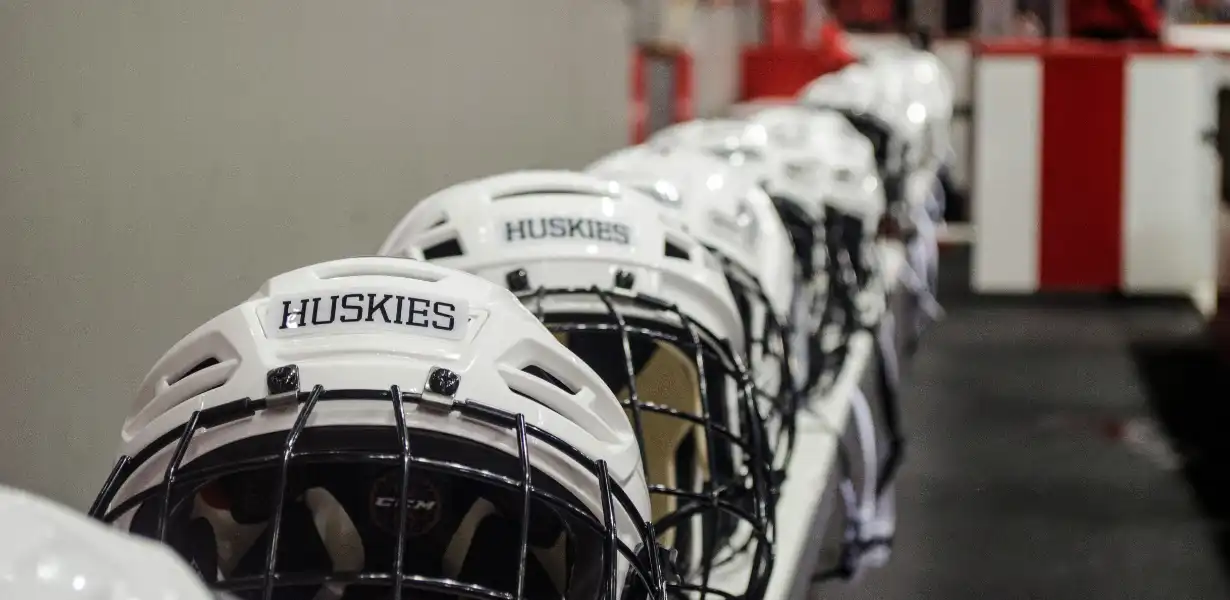
A hockey helmet should sit level on your head and feel snug without creating painful pressure points. If it rocks forward, slides backward, twists, or moves when you shake your head, it may be too loose.
Helmet fit is especially important because a helmet is one of the most important pieces of protective equipment a player wears. Most organized hockey leagues require approved helmets and appropriate face protection for youth players, making proper fit just as important as having the right equipment in the first place.
A helmet that is too tight is also a problem. Headaches, forehead pain, or deep red marks after skating may mean the helmet needs adjustment or a different shape.
Your Skates Cause Pain or Feel Unstable
Skates are one of the biggest fit troublemakers in hockey. A proper skate fit should feel snug around the foot and heel without crushing your toes. If your heel lifts, your foot slides, or you struggle to maintain ankle stability, the skate may be too large, too wide, too soft, or poorly laced.
Most hockey equipment fitting guides recommend securing skates firmly enough to provide ankle support while still allowing proper forward flex. Finding that balance helps players skate efficiently without feeling restricted.
Pain can mean several different things. Toe crunching may point to a skate that is too short. Burning arches may come from poor support, over-tight lacing, or the wrong skate shape. Heel blisters often mean too much movement inside the boot. Numb toes can happen when skates are too tight or laced too aggressively across the forefoot.
Skates should feel locked in, not torturous. If they hurt every session after a normal break-in period, the fit deserves another look.
Your Gloves Leave a Gap or Limit Stickhandling
Hockey gloves should protect your hands and wrists while still allowing you to grip and control the stick. If your fingers do not reach near the end of the glove, the gloves may be too large. If your fingertips are jammed hard against the ends, they may be too small.
A major warning sign is a gap between the glove cuff and elbow pad. That exposed wrist area can take slashes, pucks, and falls. On the other side, gloves that are too long or bulky can interfere with wrist movement and make stickhandling feel clumsy.
Good gloves should feel protective but not clunky. Your hands should still feel alive on the stick.
Your Shin Guards Do Not Cover the Right Area
Shin guards should protect the knee and shin while fitting neatly under the skate tongue or over it, depending on player preference. If the knee cup sits too low, too high, or off-center, the fit is wrong.
A shin guard that is too short can leave gaps near the knee or lower shin. One that is too long may interfere with the skate and feel awkward when bending the knee. Shin guard sizing is typically based on the distance from the center of the kneecap to the top of the skate boot, although height charts are often used as a starting point. Regardless of the size chart, the final test is how the pad sits on your leg while wearing skates.
If your shin guards constantly rotate, slide, or need extra tape just to survive warmups, they may be too loose or worn out.
Your Elbow Pads Slip or Leave Gaps
Elbow pads should cover the elbow joint and part of the forearm and upper arm. They should stay in place when you bend and extend your arm.
If the elbow cup does not sit directly over the elbow, the pad is not doing its job. If the pad slides down, leaves a gap near the glove, or pinches when you bend your arm, the size or shape may not be right.
This is one piece of gear players sometimes ignore until they fall. Then the ice writes a very rude review.
Your Shoulder Pads Sit Too High or Too Low
Shoulder pads are designed to protect the shoulders, chest, upper back, and much of the collarbone area without swallowing your neck or floating around your torso.
If the shoulder caps sit too far down the arm, the pads may be too large. If they do not cover the shoulder properly, they may be too small. If the chest pad rides up into your throat or the back pad leaves too much exposed space, the fit needs adjusting.
Good shoulder pads should feel close to the body without making you feel trapped.
Your Hockey Pants Leave Gaps
Hockey pants protect the hips, thighs, tailbone, and lower spine. They should overlap properly with the bottom of the shoulder pads and the top of the shin guards.
If your pants sag, twist, or slide down while skating, they are too loose or not secured well. If they leave a large gap between the pants and shoulder pads, your lower back or ribs may be exposed. If they are too tight, they can shorten your stride and make skating feel stiff.
Many players also outgrow pants before they realize it. If the thigh pads no longer cover enough of the leg or the spine guard sits too low, it may be time to resize.
You Keep Getting Blisters, Bruises, or Pressure Marks
Some soreness is normal in hockey, but repeated blisters, bruises, numbness, or pressure marks often point to fit problems.
Blisters are usually caused by friction, excess movement inside the skate, moisture, or a combination of all three. If blisters keep appearing in the same location, it is worth checking your skate fit, lacing technique, and sock choice.
Bruises in the same spot may mean a pad is shifting or not covering the area correctly. Numbness can mean something is too tight or pressing on a nerve.
Pay attention to patterns. One random bruise may just be hockey. The same problem every skate is a clue.
Your Gear Fit Has Changed Over Time
Hockey gear does not stay the same forever. Straps stretch. Foam compresses. Skates soften. Kids grow fast. Adult players may change size after weight loss, strength training, or different playing habits.
Even if you bought the right size originally, that does not mean it still fits. Sizing charts are useful starting points, but players should still check how each piece fits on the body while wearing the rest of their equipment.
A quick gear check at the start of each season can prevent a lot of discomfort later.
How Proper Hockey Gear Should Feel
Proper hockey gear should feel snug, secure, and protective. It should not slide around, pinch, cut off circulation, or block normal hockey movements.
A good hockey gear fit means your helmet stays steady without causing discomfort, your skates lock the heel in place, your gloves protect your wrists without limiting stick control, and your elbow pads and shin guards remain centered throughout the game. Your shoulder pads should cover the chest, back, and shoulders without riding up, while your pants protect the hips, thighs, and lower spine without sagging. Most importantly, you should be able to skate, bend, shoot, pass, and turn without constantly thinking about your equipment.
When to Replace Hockey Gear
Sometimes gear can be adjusted. Other times, it needs to be replaced. If straps no longer hold, padding feels thin, plastic is cracked, skates have lost support, or the gear no longer covers the right areas, replacement is the safer choice.
This is especially important for helmets. A damaged, heavily worn, or poorly fitting helmet should not be ignored. Protective equipment is not just about comfort. It is part of staying safe enough to keep playing.
FInal Buzzer
Hockey gear fit can affect almost every part of your game. Poorly fitting equipment can make skating harder, shooting awkward, stickhandling clumsy, and contact more uncomfortable than it needs to be.
The best gear is not always the biggest, newest, or most expensive. It is the gear that fits your body, stays in place, protects the right areas, and lets you play without fighting your own equipment.
If something feels off, check it before assuming you just need to break it in. Hockey is hard enough without gear acting like a tiny equipment gremlin.