
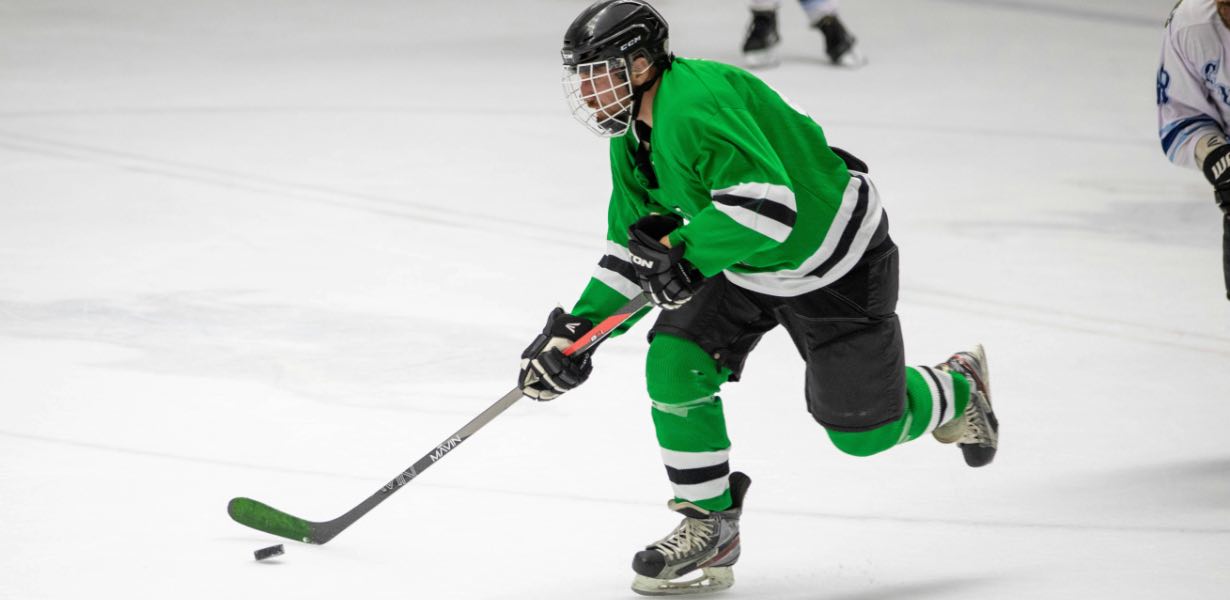
One of the most dangerous skills in hockey is the ability to release a hard, accurate shot while skating at full speed. Defenders have less time to react, goaltenders have fewer visual cues, and scoring opportunities often appear before opponents can close the gap. Yet many players notice that their shots lose power when they try to shoot while moving.
Learning how to shoot in stride without losing power requires more than simply taking your normal shot while skating. It involves proper timing, balance, weight transfer, and puck positioning. When these elements work together, players can generate powerful shots without slowing down or telegraphing their intentions.
Whether you are looking to improve your wrist shot, snap shot, or quick-release scoring ability, understanding the mechanics behind shooting in stride can help you become a more effective offensive player.
Why Shooting in Stride Matters
In modern hockey, players rarely have time to stop and set up a perfect shot. Most quality scoring chances develop off the rush, during transitions, or while attacking through traffic. Players who can shoot in stride maintain offensive pressure, release the puck more quickly, and force goaltenders to react with less preparation time.
A player who can shoot effectively in stride gains several advantages. The shot comes off the stick faster, making it harder for defenders to block. The goaltender has less time to set their angle and prepare for the release. Most importantly, the shooter can maintain speed throughout the play instead of slowing down to take a shot.
Many goals at every level of hockey are scored because the shooter keeps their feet moving and releases the puck before the defense is ready.
The Biggest Mistake Players Make
The most common mistake when learning how to shoot in stride without losing power is trying to separate skating from shooting.
Many players glide before shooting because they believe they need stable footing to generate force. While this may feel comfortable, it often reduces the effectiveness of the shot by slowing the attack and giving defenders more time to react.
Instead of thinking about skating and shooting as separate actions, players should view them as one continuous movement. The momentum generated while skating can contribute to the shot, but most of the puck’s speed still comes from proper weight transfer, body rotation, and stick flex.
The goal is not to stop moving. The goal is to use the momentum generated by your stride to support efficient weight transfer and shooting mechanics.
Focus on Proper Weight Transfer
Powerful shots depend heavily on weight transfer.
When standing still, players generate force by shifting weight from the back leg to the front leg during the shooting motion. The same principle applies while skating.
As players move through their skating stride, they should continue transferring weight toward the target while loading the stick. This allows them to maintain forward momentum while still generating power through the shot.
Many players lose power because they remain upright and rely almost entirely on their arms. While the upper body contributes to the shot, the legs and core generate much of the force.
Strong weight transfer creates a more explosive release and allows players to maintain velocity while moving at game speed.
Don’t Forget About Core Rotation
While the legs provide the foundation for a powerful shot, the core and upper body play an important role as well.
Many players focus so much on their hands and stick that they forget the importance of rotating their hips, torso, and shoulders through the release. Proper rotation helps generate force, improves stick loading, and allows energy from the lower body to flow more efficiently into the shot.
This does not require a dramatic winding motion. In fact, shooting in stride is often most effective when the movement remains compact and quick. A small but controlled rotation of the hips and shoulders can add power without slowing down the release.
Elite shooters are able to combine lower-body drive, core rotation, and stick flex into one smooth motion. The result is a shot that remains powerful even when taken at full speed.
Keep Your Knees Bent
Balance is critical when shooting in stride.
Players who stand too upright often struggle to control their body position during the shot. This can reduce power and negatively affect accuracy.
A strong hockey stance with bent knees and a low center of gravity helps maintain stability throughout the shooting motion. It also allows players to continue driving forward after the puck leaves the stick.
The lower body acts as the foundation of the shot. When that foundation is stable, the upper body can generate power more efficiently.
Good shooters often appear smooth and effortless because their lower body remains balanced throughout the entire movement.
Position the Puck Correctly
Puck placement plays a major role in generating power while skating.
For most wrist shots and snap shots taken in stride, the puck should remain slightly ahead of the body rather than directly underneath it. This position allows the stick to flex properly and helps direct energy toward the target.
When the puck drifts too far behind the body, players often lose leverage and struggle to create a powerful release. When it gets too far ahead, maintaining control becomes difficult.
Practicing puck positioning while skating can dramatically improve both shot quality and consistency.
Use Stick Flex to Your Advantage
Modern shooting techniques rely heavily on stick flex.
A powerful shot is not generated solely by arm strength. Instead, players load the stick by applying force into the ice and allowing the shaft to flex before releasing that stored energy into the puck.
When shooting in stride, many players fail to load the stick because they rush the motion or become focused on maintaining speed.
The key is learning to lean into the shot while continuing to move forward. Even a quick snap shot can generate significant power when the stick flexes properly.
Players should focus on applying pressure through the lower hand and driving through the puck rather than simply flicking it toward the net.
Stick flex enhances shot power, but it works best when combined with proper technique. Even the best stick cannot compensate for poor weight transfer or body positioning.
How to Shoot in Stride Through Better Timing
Timing is one of the most overlooked aspects of learning how to shoot in stride without losing power.
Many powerful shots in stride are released as weight is being transferred during a skating stride, allowing players to combine forward momentum with efficient shooting mechanics.
This coordination takes practice. At first, the movement may feel awkward because skating and shooting are happening simultaneously. With repetition, however, the motion becomes more natural and efficient.
Many elite shooters make this skill look easy because their stride and shot mechanics are closely synchronized.
Practice at Different Speeds
A common training mistake is practicing shooting in stride only at full speed.
Players should first master the mechanics at slower speeds before increasing intensity. Starting slowly allows the body to learn proper positioning, balance, and weight transfer.
As confidence improves, skating speed can gradually increase. Eventually, players should practice shooting in stride during game-like situations that include defenders, passing sequences, and changes of direction.
The goal is to make the skill automatic so it can be executed under pressure.
Drills to Improve Shooting in Stride
One effective drill involves skating from the boards toward the middle of the ice and releasing a shot without gliding. Focus on keeping the feet moving through the entire shot, and practice attacking from both your forehand side and off wing to develop versatility.
Another useful drill is carrying the puck through a series of cones before shooting in stride. This helps develop puck control and body positioning while moving.
Players can also practice receiving passes and shooting immediately without stopping their feet. This simulates many real-game scoring opportunities and encourages a quicker release.
The more game-like the practice environment becomes, the easier it is to transfer the skill into competition.
Developing a More Dangerous Shot
Mastering how to shoot in stride without losing power can transform a player’s offensive game. Instead of slowing down before every shot, players learn to use their skating momentum as part of the shooting process while still relying on proper mechanics to generate power.
Strong weight transfer, core rotation, proper puck positioning, bent knees, effective stick loading, and good timing all contribute to a harder and more dangerous release. While the skill requires repetition and patience, the payoff is significant.
The ability to shoot hard while skating at full speed creates more scoring opportunities, forces defenders to react more quickly, and makes shooters far less predictable. In a fast-paced game where every fraction of a second matters, shooting in stride can be the difference between a missed chance and a goal.