
A well-designed weekly hockey training plan helps players develop the skills, strength, endurance, and recovery habits needed to perform at their best. While practicing hockey itself is important, improvement often happens away from the rink through structured training that targets every aspect of the game.
Many players focus heavily on one area, such as shooting or conditioning, while neglecting others. A balanced approach allows you to build skating power, improve puck skills, increase stamina, and reduce the risk of injury. Whether you’re a youth player, recreational adult, or competitive athlete, creating a schedule that includes multiple training elements can help you make steady progress throughout the season and the offseason.
Start With Your Goals
Before building a training schedule, determine what you want to improve. A player looking to increase skating speed will need a different focus than someone trying to build endurance for longer shifts or improve puck-handling confidence.
Common hockey training goals include increasing skating speed and acceleration, building strength and power, improving conditioning, enhancing stickhandling and shooting, developing balance and agility, and addressing weaknesses that may be limiting performance.
Having a clear objective makes it easier to prioritize training time and measure progress over several weeks.
Include On-Ice Skill Work
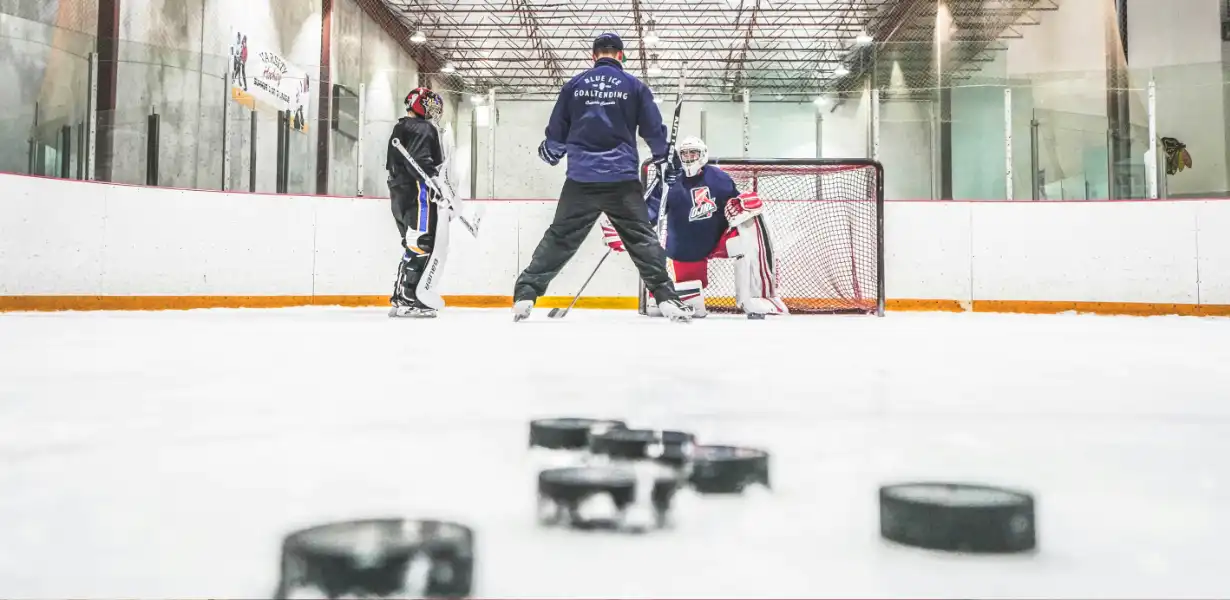
Whenever possible, hockey-specific practice should form the foundation of your training plan. Time on the ice allows players to develop skating mechanics, puck control, passing accuracy, shooting technique, and game awareness.
Not every session needs to be intense. Some practices can focus on skill development and repetition, while others may involve game situations or scrimmages. The key is consistency.
Players with limited ice access can supplement on-ice training with off-ice stickhandling drills, shooting practice, and skating-related exercises.
Schedule Strength Training
Strength plays a major role in hockey performance. Stronger players often generate more powerful strides, maintain better balance, and win more puck battles.
Most hockey players benefit from two to four strength-training sessions per week, depending on their age, training experience, and whether they are in-season or offseason. Focus on movements that train multiple muscle groups rather than isolating individual muscles.
Exercises commonly used in hockey training include squats, lunges, deadlifts, step-ups, rows, presses, and core exercises. These movements help develop the lower-body power and full-body stability required during games.
During the season, strength sessions are often shorter and focused on maintenance. In the offseason, players can increase training volume to build additional strength and muscle.
Add Conditioning Sessions
Hockey requires repeated bursts of high-intensity effort followed by short recovery periods. Because of this, conditioning programs should reflect the demands of the game.
Rather than relying entirely on long-distance running, many players benefit from interval-based training that alternates periods of hard work and recovery. Examples include sprint intervals, cycling intervals, rowing, hill workouts, or circuit training.
During the season, one or two conditioning sessions per week are often enough to maintain fitness. During the offseason, players may perform additional conditioning sessions depending on their goals, training experience, and overall workload.
Don’t Neglect Mobility and Flexibility
Mobility training is often overlooked, but it can improve movement quality and may help reduce injury risk by maintaining healthy ranges of motion.
Hockey places significant demands on the hips, groin, ankles, and lower back. Regular mobility work can help maintain range of motion and reduce stiffness caused by skating and training.
Even 10 to 15 minutes of mobility exercises after workouts or before practices can provide long-term benefits. Dynamic warmups before training and light stretching afterward are simple ways to build mobility into your routine.
Make Recovery Part of the Plan
One of the biggest mistakes players make is training hard every day without allowing adequate recovery. Performance improvements occur when the body has time to adapt to training.
Recovery strategies may include getting adequate sleep, staying hydrated, eating enough protein and quality carbohydrates, taking rest days when needed, and using light activity such as walking, cycling, or mobility work on recovery days.
Scheduling at least one lower-intensity day each week can help prevent fatigue from accumulating over time.
Position-Specific Training Considerations
While every hockey player needs a combination of skill work, strength, conditioning, and recovery, different positions often have slightly different priorities.
Forwards frequently focus on acceleration, agility, and offensive skill development. Defensemen may spend additional time working on backward skating, gap control, and overall strength. Goaltenders often place greater emphasis on flexibility, lateral movement, reaction time, and recovery due to the unique physical demands of the position.
These differences do not require completely separate training plans, but they can influence where players choose to spend extra development time.
Consider Your Age and Experience Level
Not every player needs the same training schedule. Younger players generally benefit most from spending additional time on skating, puck skills, coordination, and overall athletic development. At these ages, building a strong foundation of movement and hockey skills is often more important than focusing heavily on strength training.
As players become older and gain more experience, structured strength and conditioning work can play a larger role in their development. More advanced players may also benefit from position-specific training and higher training volumes, provided they are recovering properly between sessions.
The most effective training plan is one that matches a player’s age, experience, and current goals rather than simply copying what pro athletes are doing.
Building a Weekly Hockey Training Plan That Works
Every player’s schedule will be different, but a balanced week might look something like this:
Monday: Strength training and mobility work
Tuesday: On-ice skating, edgework, and puck-control practice
Wednesday: Conditioning workout and stickhandling practice
Thursday: Strength training and shooting drills
Friday: On-ice practice, scrimmage, or game
Saturday: Conditioning, skills development, or game
Sunday: Recovery day with light mobility work and stretching
This structure provides opportunities to improve multiple areas while still allowing time for recovery. Players who have multiple games each week may need to reduce conditioning or strength-training volume to prioritize performance and recovery.
Adjust the Plan Throughout the Season
A training schedule should not remain identical all year. During the offseason, players often focus more heavily on strength development, conditioning, and skill improvement. Once games begin, training volume usually decreases to ensure players remain fresh and ready to compete.
Pay attention to energy levels, performance, and recovery. If fatigue begins affecting practices or games, reducing training volume temporarily may be beneficial. Consistent training over several months is far more effective than short periods of excessive workload followed by burnout.
Building Long-Term Success
The best weekly hockey training plan is one you can follow consistently. A balanced schedule that combines skill development, strength training, conditioning, mobility work, and recovery helps players improve every aspect of their game while reducing the likelihood of overtraining.
Hockey improvement rarely comes from one workout or one great practice. Players who follow a consistent weekly hockey training plan throughout the season and offseason often see the biggest gains because small improvements compound over time. The goal is not to train as much as possible, but to train with purpose and recover well enough to keep progressing.
With a structured approach and realistic expectations, players can continue developing their skills, fitness, and confidence while building habits that support long-term success on the ice.