
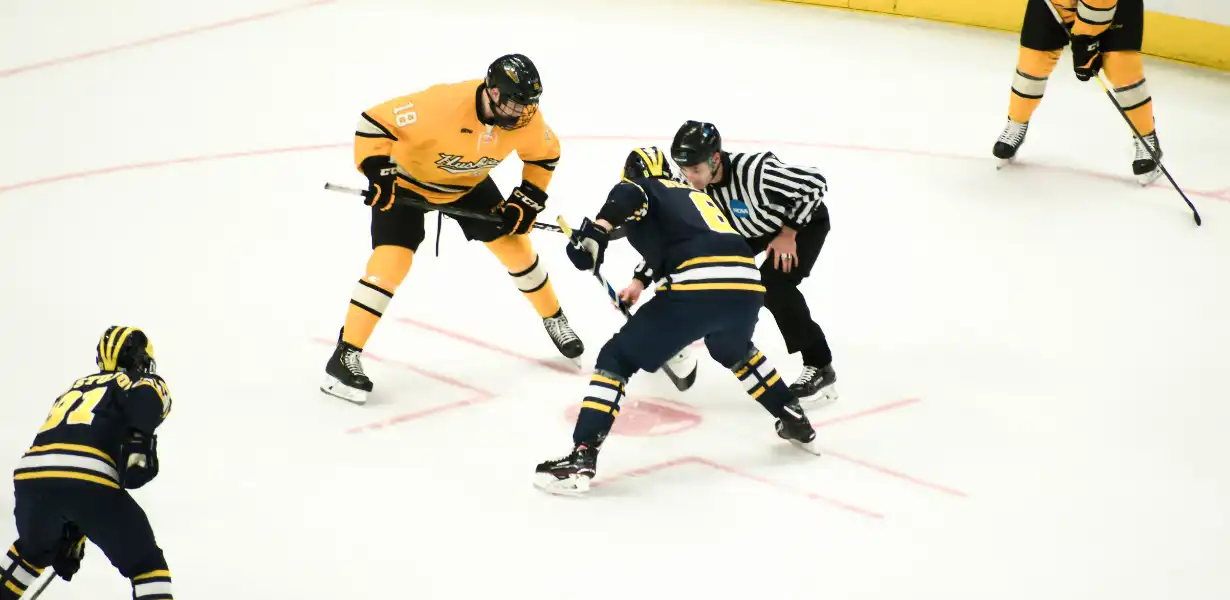
Hockey is a game built on speed, pressure, and constant movement. When play suddenly stops because the puck can no longer be moved, it often raises questions from players and fans alike. One of the most common outcomes of these situations is a faceoff—but why?
Recognizing why an unplayable puck leads to a faceoff helps illustrate how hockey’s rules are designed to ensure fairness, sustain game flow, and prioritize player safety.
What Does “Unplayable Puck” Mean in Hockey?
An unplayable puck is one that cannot be legally played by any skater within a reasonable amount of time. The puck does not need to be completely hidden; it simply needs to be inaccessible.
Common situations include:
• The puck pinned along the boards by multiple players
• The puck trapped under a skate or stick
• The puck caught in a player’s equipment
• The puck lodged in the netting or boards
• A skater unintentionally freezing the puck without possession
When officials determine the puck cannot be played safely or fairly, they stop play.
Why the Puck Being Unplayable Leads to a Faceoff
The reason the puck being unplayable leads to a faceoff is rooted in three fundamental principles of hockey rules: flow, fairness, and safety.
Maintaining Game Flow
Hockey is designed to move quickly. If players were allowed to pin the puck indefinitely, the game would slow to a crawl. A faceoff immediately restarts play and restores momentum.
Without this rule:
• Teams could intentionally stall
• Offensive pressure would disappear
• Game tempo would suffer
The faceoff keeps hockey moving at the pace it is meant to be played.
Ensuring Competitive Fairness
When the puck is tied up, one team may benefit simply by preventing play rather than earning possession. Stopping play removes that advantage.
A faceoff:
• Resets competition evenly
• Prevents stalling tactics
• Ensures possession is contested, not withheld
This is especially important late in games or during sustained pressure.
Protecting Player Safety
Extended scrums increase the risk of:
• Stick infractions
• Knee and ankle injuries
• Players being pushed dangerously into the boards
By blowing the whistle and awarding a faceoff, officials reduce unnecessary risk while preserving the physical nature of the sport.
How Officials Decide the Puck Is Unplayable
Referees do not stop play the moment the puck becomes tied up. They allow players a brief opportunity to free it. The decision to stop play is based on judgment and experience.
Officials consider:
• Whether the puck is visible
• Whether progress is being made
• Player safety concerns
• The likelihood of legal possession
There is no fixed time limit written into the rules. Instead, officials use consistent judgment across the game.
This standard is applied across organizations such as the National Hockey League, USA Hockey, and the International Ice Hockey Federation.
Where the Faceoff Takes Place After an Unplayable Puck
When the puck being unplayable leads to a faceoff, the location of that faceoff is determined by responsibility under the rules, not by subjective intent in most situations.
General Faceoff Placement Guidelines
• If the puck becomes unplayable through normal play and neither team is deemed responsible, the faceoff takes place at the nearest appropriate faceoff dot
• If the attacking team causes the puck to become unplayable in the offensive zone—such as pinning it along the boards with no ability to continue play—the faceoff is typically moved outside the offensive zone
• If the defending team is responsible for making the puck unplayable in its own zone, the faceoff usually remains inside the defensive zone
• Clear, deliberate actions to stop play, such as intentionally falling on the puck, may result in both faceoff relocation and a delay-of-game penalty
This structure discourages teams from creating stoppages for tactical advantage while keeping restarts consistent and fair.
Unplayable Puck vs. Goalie Freezing the Puck
It is important to distinguish an unplayable puck from a goalie intentionally covering the puck.
When a goalie freezes the puck:
• The action is legal
• Play is stopped immediately
• Faceoff placement follows crease and zone rules
When a skater causes the puck to become unplayable:
• Officials assess responsibility
• Faceoff placement may disadvantage the responsible team
• Penalties may apply if the action is deliberate
Both situations result in faceoffs, but the reasoning and rule application differ.
Can Players Be Penalized for Making the Puck Unplayable?
Yes. If a player clearly and deliberately causes the puck to become unplayable, officials may assess a delay-of-game penalty.
Examples include:
• Intentionally falling on the puck
• Holding the puck against the boards with no attempt to move it
• Trapping the puck using equipment or the body
This reinforces why the puck being unplayable leads to a faceoff rather than allowing players to stop play without consequence.
Why This Rule Matters at Every Level of Hockey
From youth leagues to professional hockey, this rule teaches players to:
• Keep their feet moving
• Compete for possession
• Avoid relying on stoppages for relief
It also gives officials a consistent tool for managing physical play and maintaining control in high-intensity situations.
For fans, understanding this rule adds clarity to moments that might otherwise feel confusing or arbitrary.
The Faceoff as Hockey’s Reset Mechanism
The puck being unplayable leads to a faceoff because hockey prioritizes speed, fairness, and safety. Rather than allowing scrums to stall the game or create unfair advantages, the faceoff resets play and restores balance.
The next time a whistle blows during a board battle, you’ll know it’s not just a stoppage—it’s the rulebook working to keep hockey fast, competitive, and continuous.